
A primer on the technologies and companies reshaping nuclear power - from compact microreactors to modular grid-scale plants. © 2026 Jarsy Research
On the morning of July 4, 2026, Aalo Atomics’ Critical Test Reactor - a full-scale, zero-power version of its Aalo-X design - sustained a nuclear chain reaction at Idaho National Laboratory. It generated no electricity or usable heat and had no turbine. Yet it was the fourth privately developed US reactor to achieve zero-power criticality within a month, meeting a deadline established by executive order roughly thirteen months earlier.
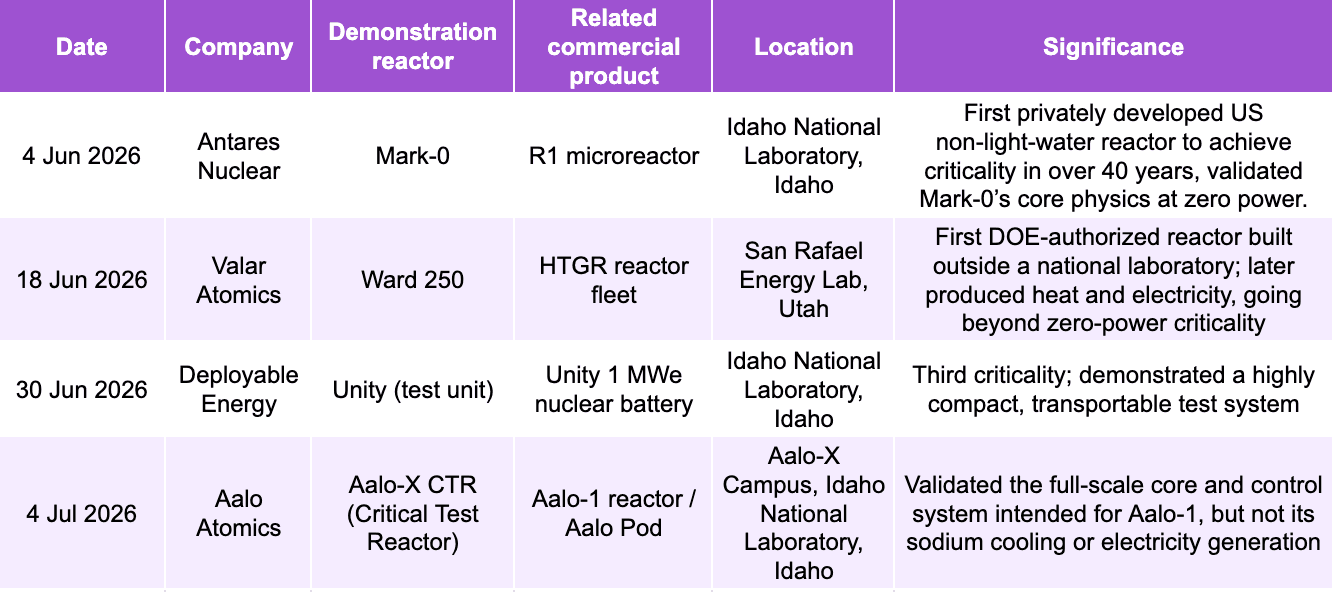
Table 1: Four recent events on achieving criticality. © 2026 Jarsy Research
Aalo-X offers an early sign that American nuclear may be entering a new phase. Its rapid path to criticality is a meaningful engineering achievement, particularly in a field where development has traditionally taken decades, although questions about cost, fuel, licensing and large-scale manufacturing remain. This research explains the technologies behind this shift, the companies driving it and the challenges ahead.
Chapter 1. The Rise and Stagnation of Nuclear Power
Nuclear power began as a wartime government project. In 1942, Chicago Pile-1 achieved the first controlled nuclear chain reaction. The technology soon moved into electricity generation: Experimental Breeder Reactor I produced power in 1951, followed by Obninsk in 1954, Calder Hall in 1956 and Shippingport in 1957. Reactor technology developed for submarines was then adapted for civilian power plants.
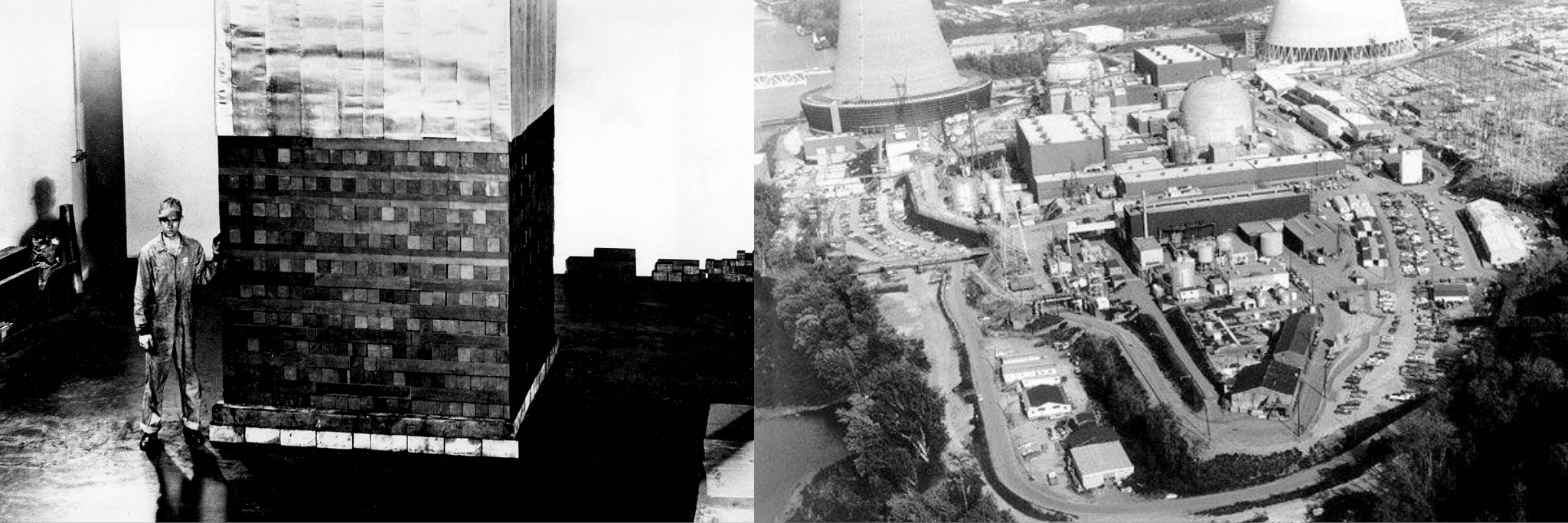
Built at the University of Chicago on December 2, 1942, Chicago Pile-1 (CP-1) was the world's first nuclear reactor (left); Shippingport nuclear power plant (right). Image Credits: Wikipedia, Intelligence Resource Program
Commercial deployment accelerated through the 1960s and 1970s. The United States ordered large numbers of reactors, while the 1973 oil shock pushed countries with limited domestic fuel resources - most notably France, but also Japan and South Korea - to treat nuclear power as an energy-security programme. By 1990, the US had commissioned more than 100 power reactors; nuclear subsequently supplied about one-fifth of American electricity for decades. France pursued a more standardised national programme and still obtains roughly two-thirds of its electricity from nuclear power.
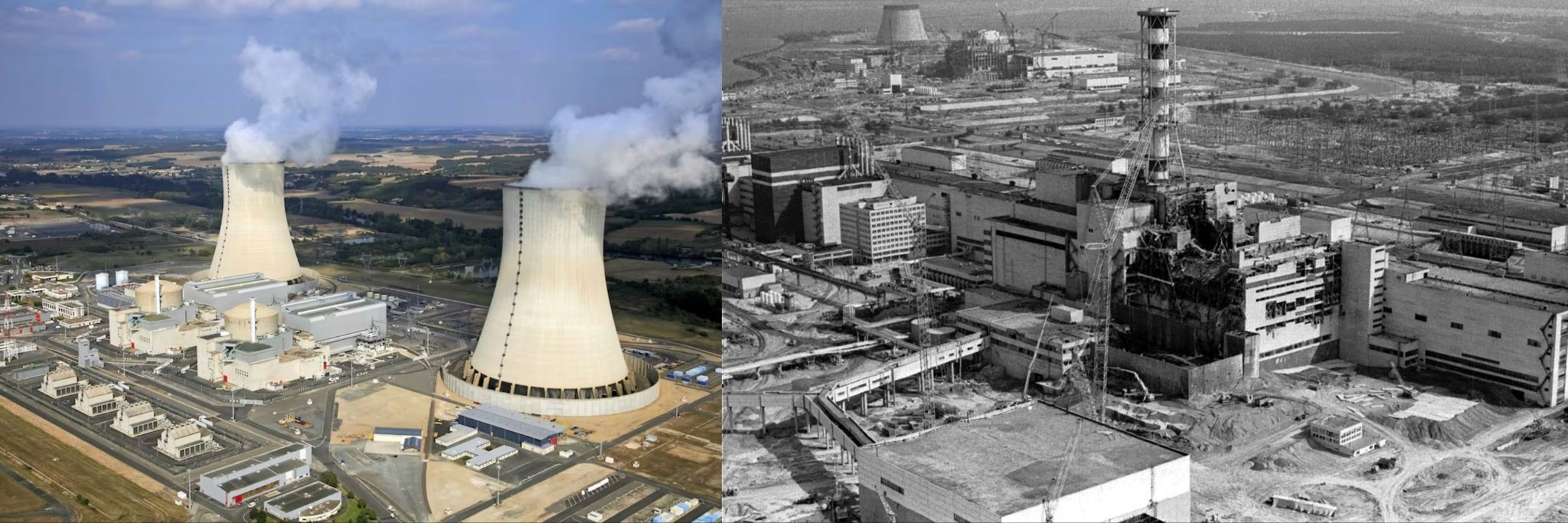
Civaux nuclear power plant in France (left); A reactor at the Chernobyl power plant exploded on April 26, 1986 (right). Image Credits: Wikipedia, CNN
US reactor orders were already declining before the 1979 Three Mile Island accident as demand forecasts weakened, financing costs rose and large, customised projects suffered delays. Three Mile Island, Chernobyl (1986) and Fukushima (2011) further damaged public confidence, while cheap natural gas and increasingly competitive renewables made new reactors harder to finance.
Existing plants, however, continued to provide reliable electricity. More than 400 reactors operate worldwide, and nuclear power still supplies roughly one-fifth of US electricity. The industry’s central failure was not operation but construction: much of the West lost the ability to build reactors quickly and at predictable cost. Advanced-reactor developers aim to address this through smaller plants, standardised designs and repeatable manufacturing.
Chapter 2: The Nuclear Revival
Nuclear has returned to the energy agenda because three conditions converged: an electricity-demand shock, a more accommodating policy framework and a new generation of well-funded companies pursuing different technologies and manufacturing models.
2.1 The Demand Shock
First, the United States is experiencing an electricity-demand shock. From the mid-2000s into the early 2020s, US electricity consumption was broadly flat. That pattern has now changed, led by rapidly growing data-centre demand and reinforced by manufacturing investment and wider electrification.
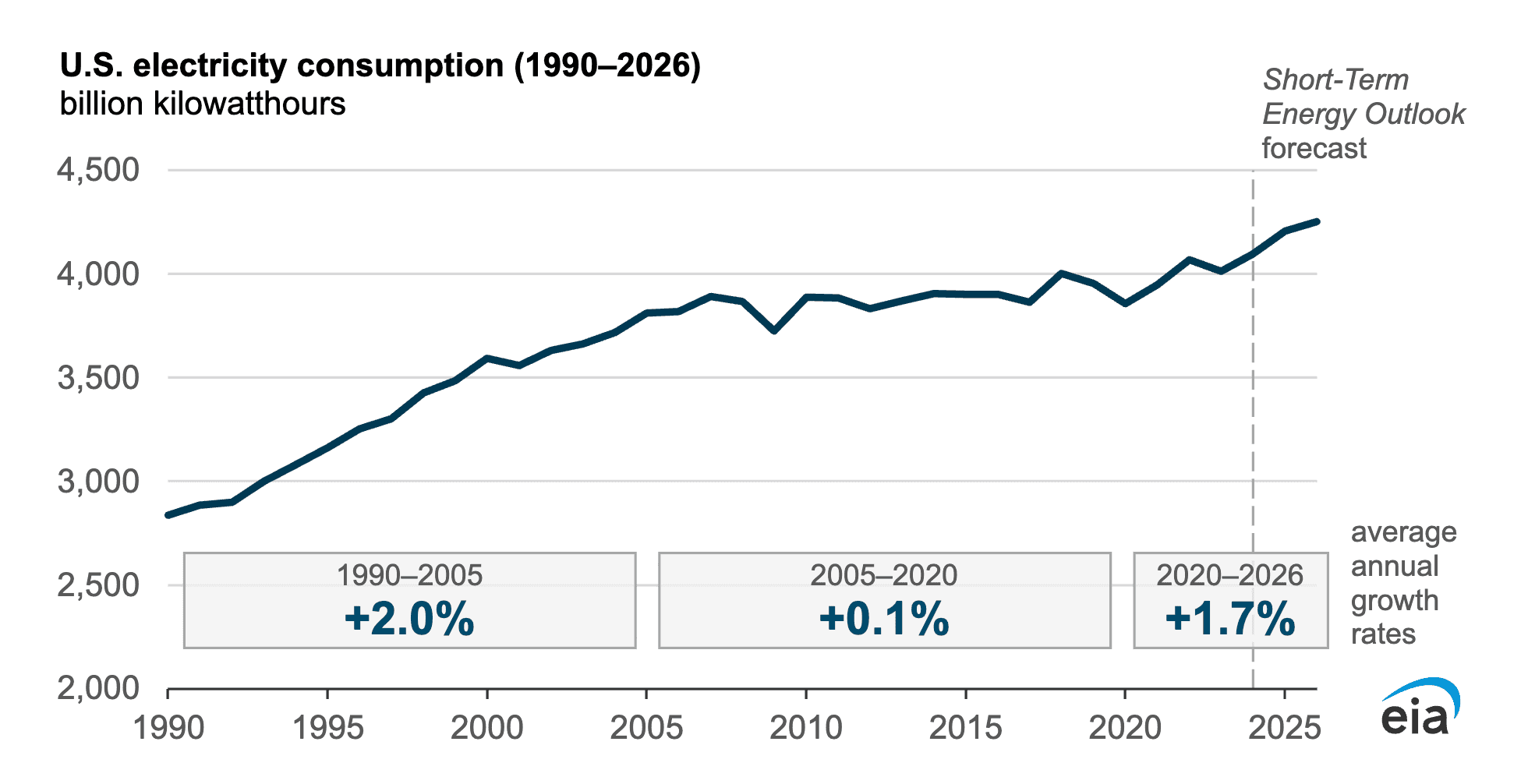
Source: U.S. Energy Information Administration, Monthly Energy Review and Short-Term Energy Outlook, May 2025.
EPRI estimates that US data centres consumed roughly 177-192 TWh in 2024. By 2030, consumption could rise to between 383 and 793 TWh. Even the low scenario points to sustained growth, while the high scenario would make data centres one of the most consequential new loads on the US grid.
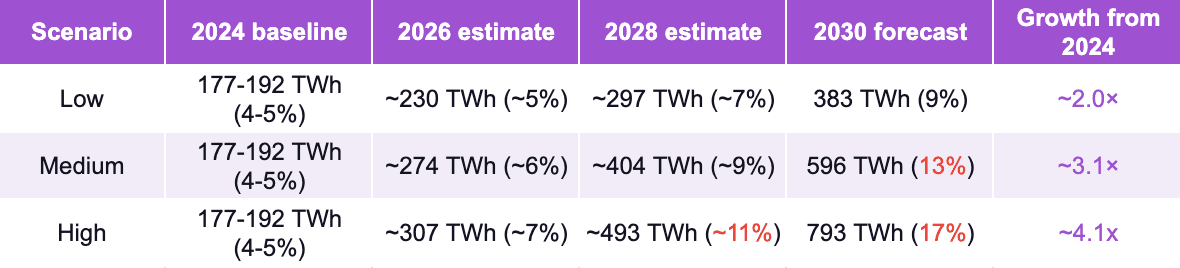
Table 2: EPRI estimates of US data-centre electricity consumption under different growth scenarios. Percentages in brackets represent data-centre consumption as a share of total US electricity consumption. Source: Electric Power Research Institute (EPRI), Powering Intelligence (2026).
© 2026 Jarsy Research
Demand growth does not make nuclear the only or necessarily the cheapest option. Natural gas can be built more quickly but produces carbon emissions, while wind and solar require transmission, storage or other firm capacity. Nuclear’s potential advantage is its ability to provide continuous, low-carbon power from a relatively small site.
2.2 Policy caught up with the industry
Advanced reactors were historically reviewed under regulations developed mainly for large light-water plants. Since 2024, Congress, DOE and the NRC have introduced new routes for testing and licensing smaller and non-traditional designs.
DOE programmes allow privately funded test reactors to operate under federal authorisation, helping developers generate physical data sooner. That authorisation is not a commercial NRC licence, although the resulting evidence may support a later application. Part 53 addresses the commercial pathway by providing an optional, risk-informed and technology-inclusive licensing framework.
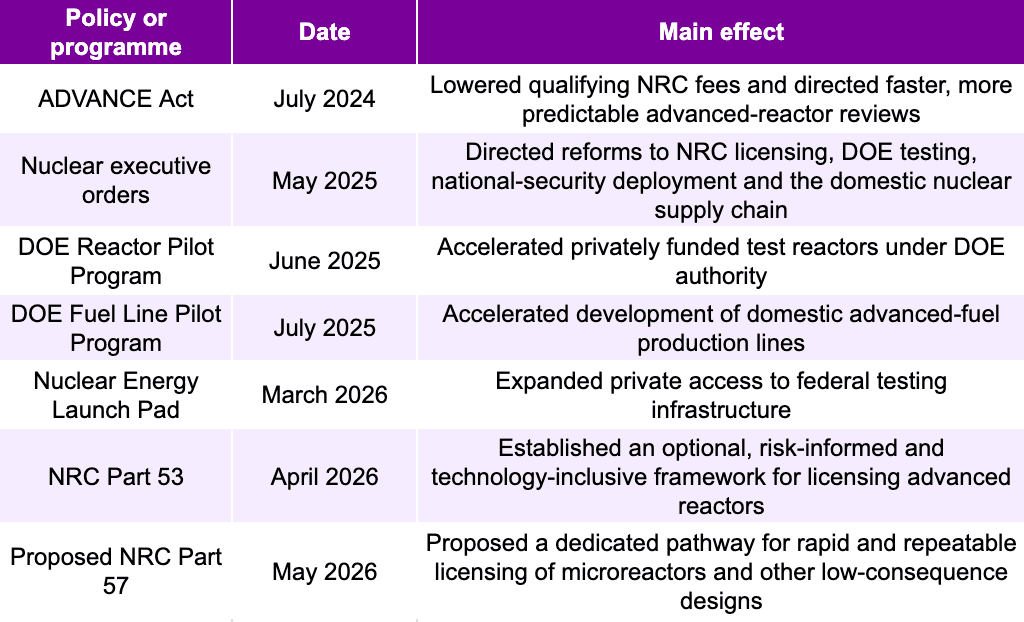
Table 3: Major changes in US advanced-nuclear policy and regulation, July 2024-May 2026. Source: Congress, DOE (Department of Energy), NRC (Nuclear Regulatory Commission) and Federal Register. © 2026 Jarsy Research
Together, these changes reduce regulatory mismatch and accelerate experimentation. Their larger test will be whether demonstration data can translate into timely commercial approvals and repeatable deployment.
2.3 A change in who is building
Historically, nuclear plants were developed by utilities, governments and large industrial companies. Much of the current wave is being led by privately financed developers pursuing smaller, standardised products and factory-based production. Chapter 4 examines these companies, their technologies and their progress.
Chapter 3: Fission and the New Reactor Era
3.1 Fission and energy density
A neutron striking a uranium-235 nucleus can split it, releasing roughly 200 MeV of energy and, on average, 2.4 additional neutrons. About 93% of this energy is released immediately; the remaining 7% emerges later through radioactive decay. This delayed energy produces decay heat, a central issue in reactor safety discussed in Section 3.3.
Energy density is what makes nuclear power possible. One kilogram of uranium contained in typical light-water-reactor fuel can generate around 360,000 kWh of electricity, compared with about 3 kWh from a kilogram of coal - a difference of more than 120,000 times. A 1 GWe nuclear plant typically requires around 20-25 tonnes of fresh uranium annually, while a comparable coal plant may consume 2.5-3 million tonnes.
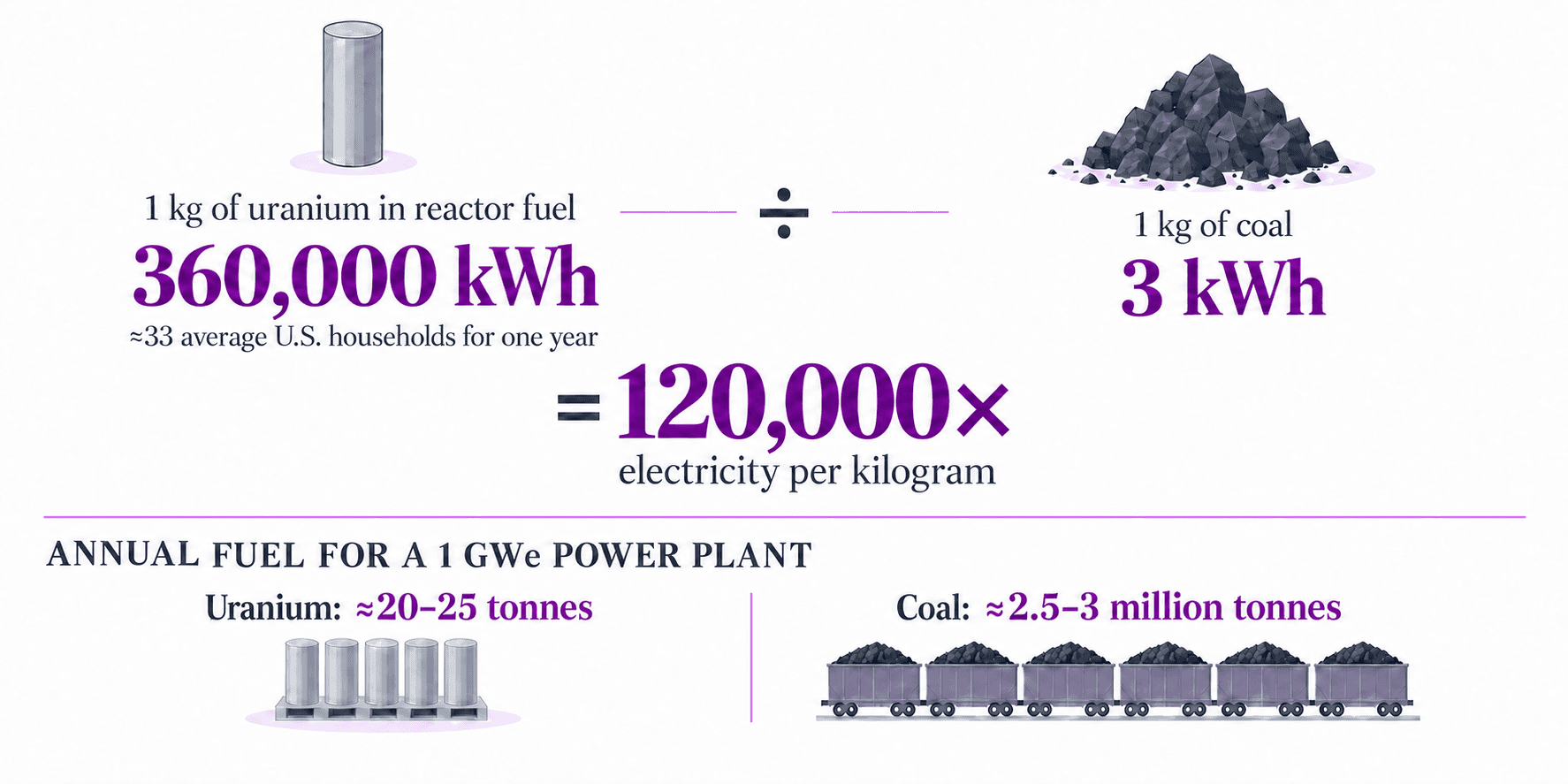
Source: EIA (US Energy Information Administration), NRC (Nuclear Regulatory Commission). © 2026 Jarsy Research
This energy density also shapes the industry’s economics. Fuel represents a relatively small share of nuclear generation costs; construction, financing and operations matter far more. Nuclear competitiveness is therefore generally more sensitive to interest rates and project delays than to uranium prices.
3.2 Why a chain reaction can be controlled
A reactor’s condition is measured by k-effective, which compares the neutron population between generations. Below one, the reaction declines; at one, it remains steady; and above one, it grows. “Critical” simply means k-effective equals one, but it says nothing about power output. Zero-power criticality therefore confirms a sustained chain reaction, not full-power operation or electricity generation.
Around 99.35% of neutrons from uranium-235 fission are released immediately. The remaining 0.65%, called delayed neutrons, emerge over seconds to about a minute. This small fraction slows changes in reactor power enough for control rods and automated systems to respond, making controlled operation possible.
3.3 Why cooling remains necessary after shutdown
Stopping the chain reaction does not stop heat production. Radioactive fission products continue to decay, producing approximately 6-7% of the reactor’s previous thermal output immediately after shutdown. This falls to around 1-2% after an hour and a few tenths of a percent after several days.
For a 3,000 MWt reactor, 6-7% represents approximately 200 MW of residual heat. This heat cannot be switched off and must continue to be removed. Loss of cooling after shutdown was central to the core damage at Three Mile Island and Fukushima.
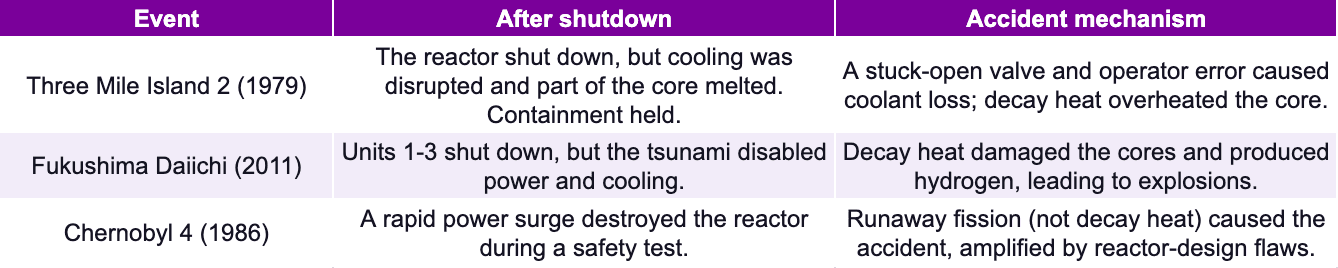
Table 4: The role of decay heat in major reactor accidents. © 2026 Jarsy Research
This is why passive safety matters. The relevant question is not whether a reactor can shut down, but whether it can continue removing decay heat without external electricity, powered pumps or immediate operator intervention. Passive systems reduce dependence on active equipment, but they do not make a reactor incapable of failure.
3.4 Fuel and Enrichment
Natural uranium contains only about 0.71% uranium-235, the isotope that most readily sustains a chain reaction. Enrichment increases this concentration, allowing designers to place more fissile material inside a smaller core and, in some designs, operate for years without refuelling.
Most operating reactors use conventional low-enriched uranium (LEU) containing less than 5% uranium-235. Many advanced designs instead require high-assay low-enriched uranium (HALEU), containing between 5% and 20%. HALEU remains classified as LEU because it stays below the 20% threshold for highly enriched uranium.
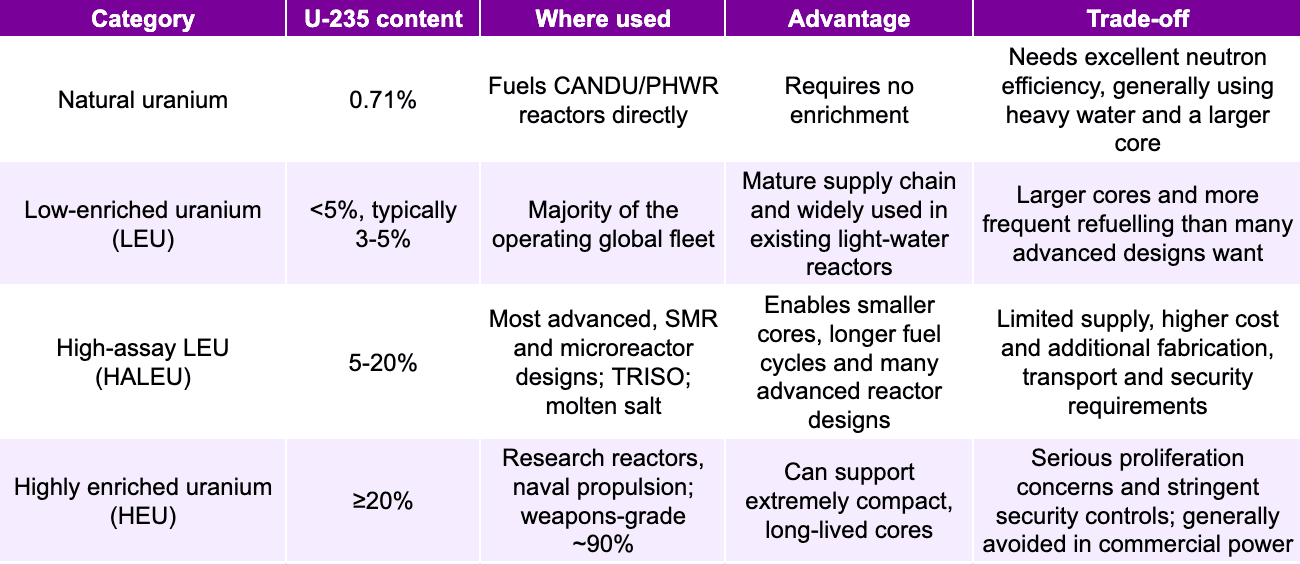
Table 5: Uranium enrichment categories and their trade-offs. © 2026 Jarsy Research
Higher enrichment can enable smaller cores, longer fuel cycles and higher fuel burnup, but it costs more and carries additional fabrication, transport and security requirements. Limited HALEU supply therefore makes it both an enabling technology and a major deployment risk. Some developers avoid this constraint by using conventional LEU or LEU+, while others accept it for the design advantages HALEU provides (The company profiles in Chapter 4 examine these choices individually.)
Fuel form also matters. The best-known example is TRISO (tri-structural isotropic fuel) in which tiny uranium kernels are surrounded by layers of carbon and ceramic material. Each particle acts as a miniature containment system, helping prevent fission products from escaping even at very high temperatures.
Fuel choices therefore affect not only reactor performance, but also the enrichment, manufacturing and transport infrastructure required for deployment.
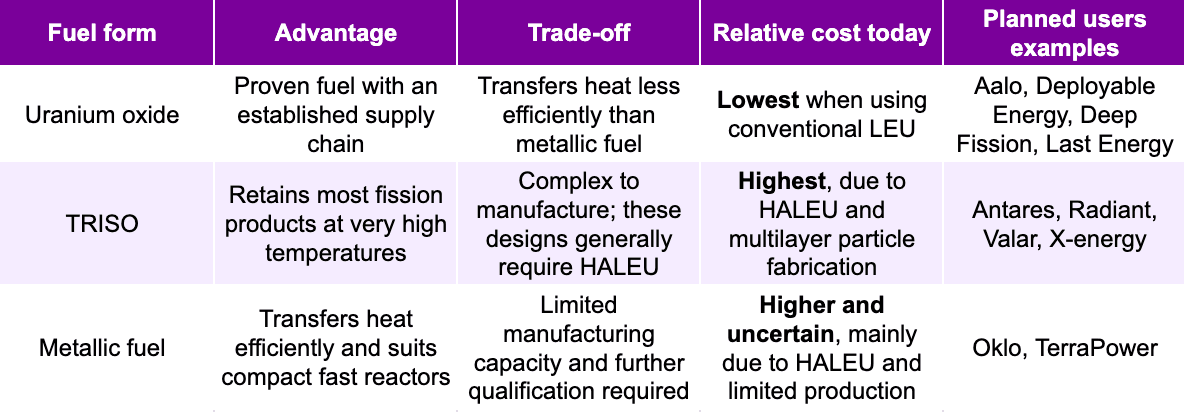
Table 6: Fuel forms and their trade-offs. © 2026 Jarsy Research
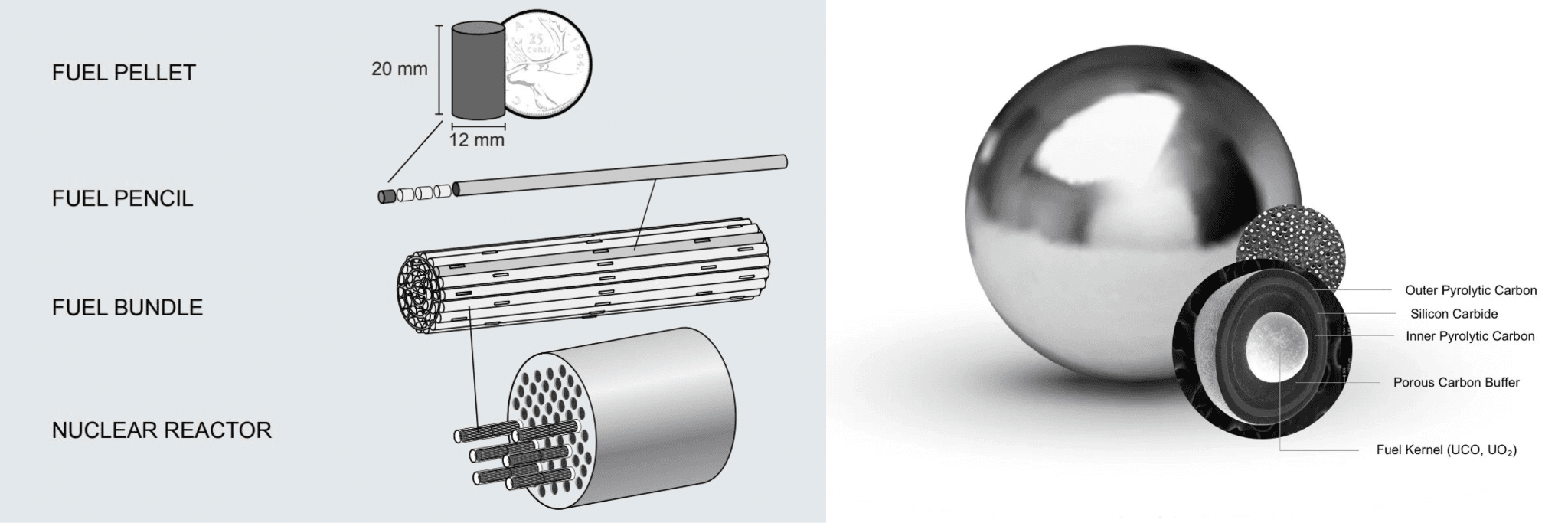
Uranium Oxide fuel (left) and TRISO Fuel (right). Image Credits: McMaster University, MIT
3.5 Why small size changes reactor engineering
A smaller reactor is not simply a conventional nuclear plant scaled down. Reducing core size changes how heat can be removed, how the plant can be manufactured and where it can operate. These features may allow smaller reactors to use fewer pumps, pipes and emergency systems than conventional plants. Some designs can be delivered as largely factory-assembled modules and installed where conventional nuclear plants would be impractical.
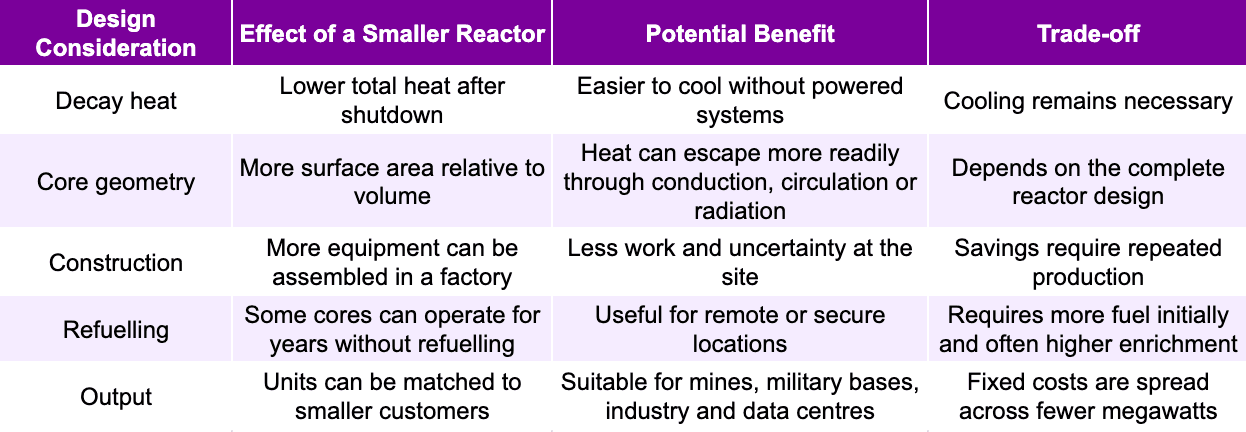
Table 7: How smaller size changes reactor engineering and economics. Source: DOE and Idaho National Laboratory. © 2026 Jarsy Research
Smaller size does not guarantee cheaper electricity. The commercial case depends on whether simpler systems, shorter construction periods and factory production can compensate for the loss of economies of scale.
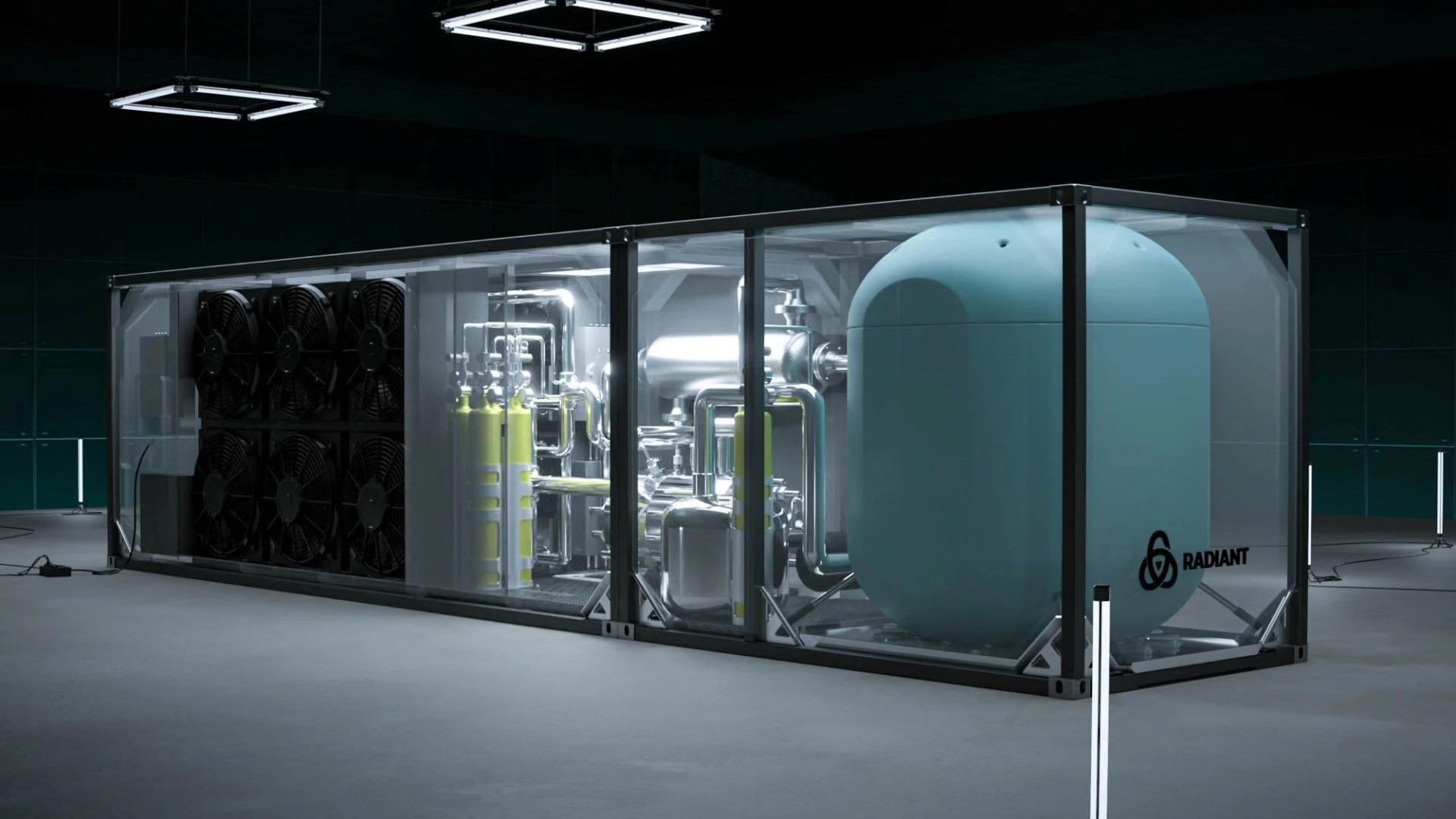
Radiant’s 1.2 Mega-watt microreactor Kaleidos. Image Credit: Radiant
3.6 Why advanced reactors may work now
Most advanced-reactor concepts are not new. Sodium cooling, gas-cooled reactors, TRISO fuel and compact nuclear systems were demonstrated decades ago. What has improved is the ability to model reactor behaviour digitally, manufacture specialised components, qualify more resilient fuels and design smaller systems around passive heat removal.
The commercial model has also changed. Developers are pursuing products ranging from transportable microreactors to modular and utility-scale plants, supported by new regulatory pathways and customers seeking dependable power. Standardised designs and repeat construction may reduce costs, although neither has yet been demonstrated at commercial scale.
For the first time in decades, better technology, policy support, capital and customer demand are aligning behind advanced nuclear. The next step is to turn this momentum into reactors built repeatedly, on schedule and at a competitive cost.
Chapter 4: The Companies Shaping Advanced Nuclear
Today’s nuclear developers are not building the same product. Their designs range from transportable microreactors producing around one megawatt to utility-scale plants producing hundreds of megawatts. Some rely on established reactor technology and conventional fuel, while others use advanced fuels, coolants and manufacturing methods.
This chapter maps the market by reactor size and product type before examining selected startups and larger developers in greater detail.
4.1 Who is building what
The boundaries between reactor categories are not fixed. Developers can combine multiple small reactors into a larger plant, and the same design may serve data centres, industrial customers or the electricity grid. Nevertheless, planned output provides a useful starting point.
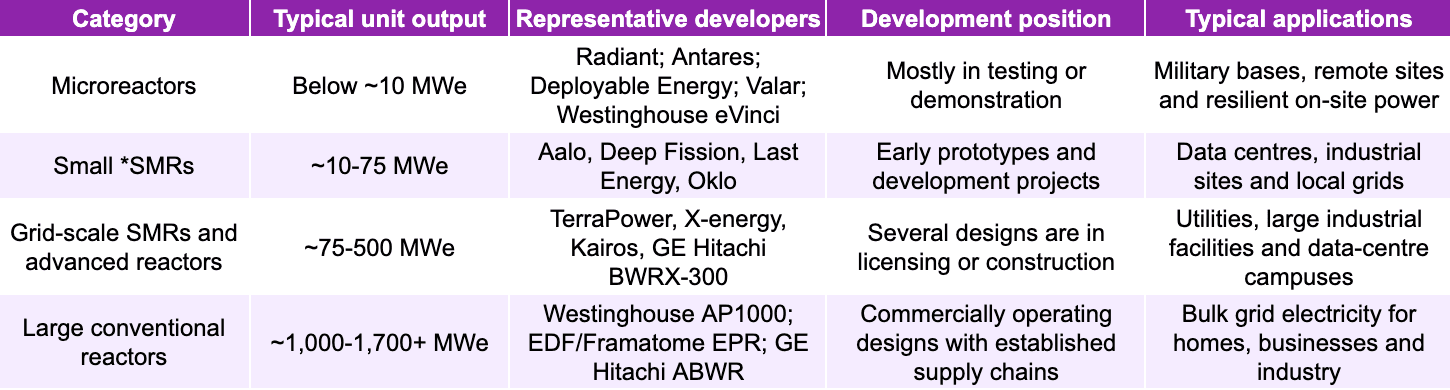
Table 8: Advanced-reactor developers by output and intended application. *SMR: Small Modular Reactors. © 2026 Jarsy Research
The smallest reactors are generally designed for places where reliability, transportability or independence from the grid matters more than achieving the lowest possible generation cost. Larger modular and advanced reactors compete more directly with conventional power plants and must meet utility expectations for cost, reliability and operating life.
4.2 Microreactor Startups
Microreactor startups are developing compact reactors for military bases, remote sites and other customers that value resilient on-site power. The four companies below are pursuing systems below around 10 MWe, but differ in fuel, cooling technology and commercial strategy.
Antares
Antares was founded in 2023 by Jordan Bramble and Julia DeWahl, whose backgrounds include SpaceX and technology investment. Its R1 microreactor is primarily designed for defence, remote infrastructure and space applications.
The reactor uses passive sodium heat pipes to transfer heat from a TRISO-fuelled core. Antares describes configurations ranging from 100 kWe to 1 MWe, designed to operate for six years or more without refueling. Its Mark-0 test core reached zero-power criticality in June 2026, while subsequent prototypes are intended to add heat removal and power conversion.
Government customers provide Antares with an initial market in which energy security and transportability may carry greater value than the lowest grid-level electricity price.
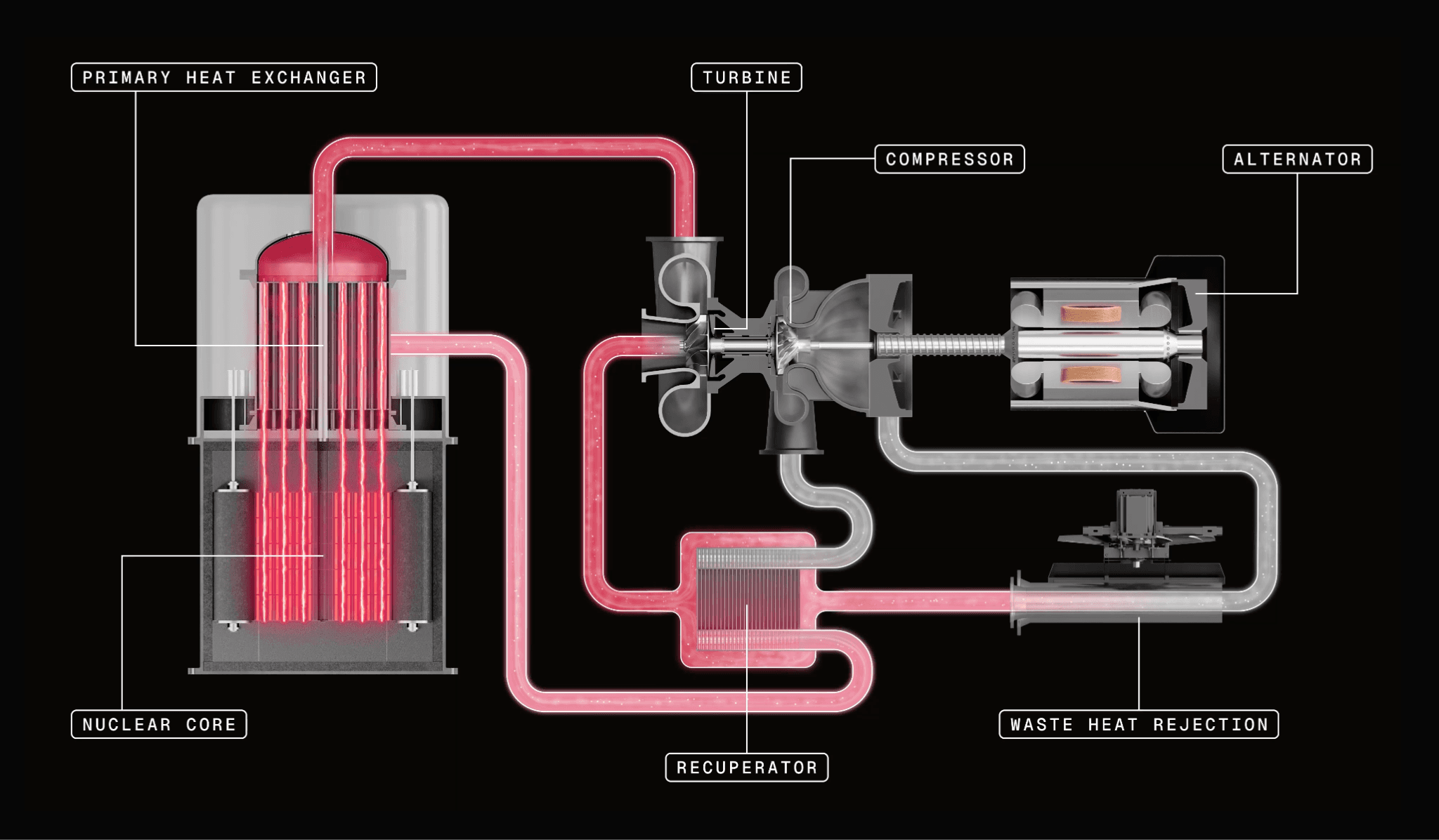
Antares’ R1 Microreactor cutaway diagram. Image Credit: Antares
Deployable Energy
Founded in 2025, Deployable Energy is developing Unity, a 1 MWe helium-cooled reactor for distributed and behind-the-meter power.
Unity’s main distinction is its use of conventional uranium-dioxide fuel enriched to approximately 4.95%, avoiding dependence on HALEU and TRISO. This could simplify its fuel supply, although lower enrichment places tighter limits on core size, power density and operating life.
The Unity demonstration reached zero-power criticality at Idaho National Laboratory in June 2026. Deployable Energy is also engaged in NRC pre-application work for a commercial version.
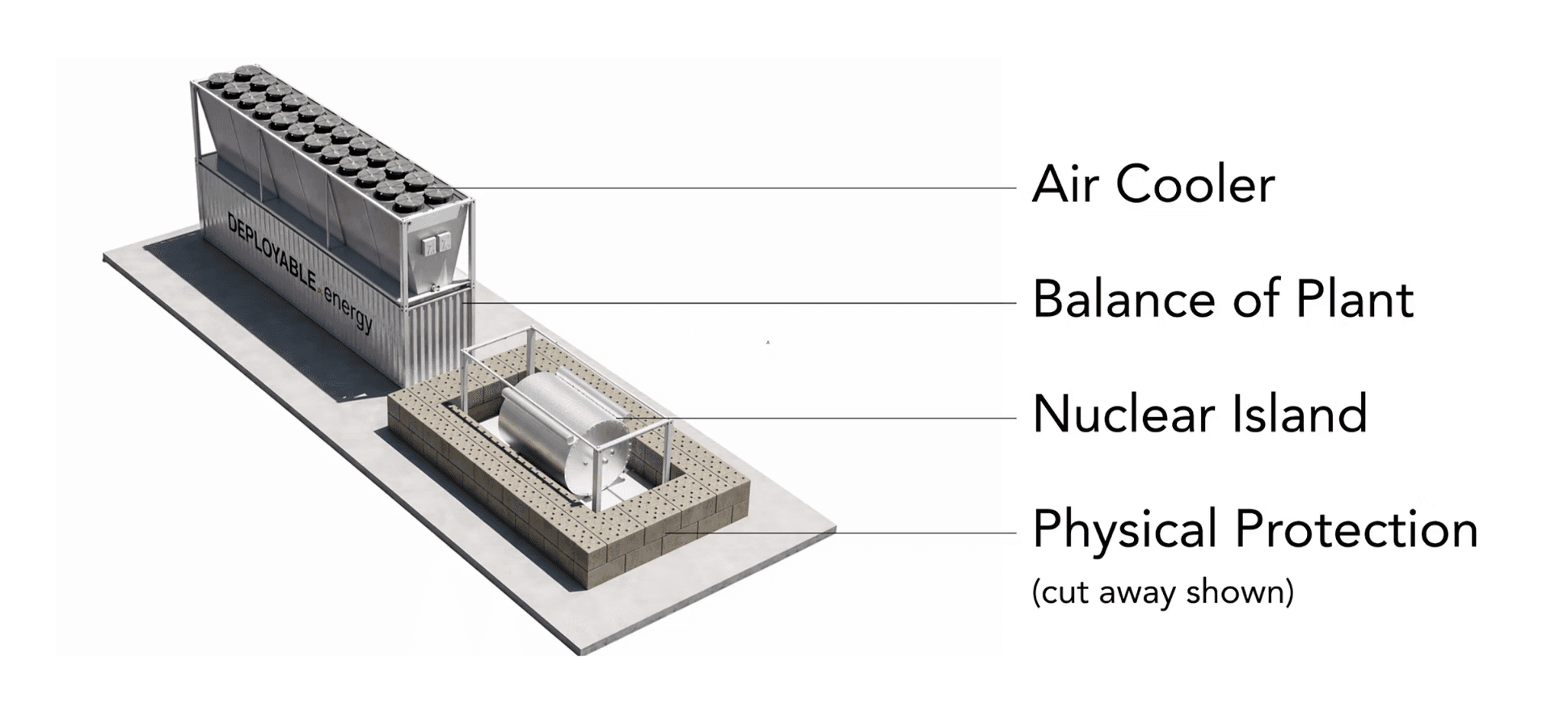
Unity Nuclear Battery by Deployable Energy. Image Credit: Deployable Energy
Radiant Industries
Radiant was founded in 2019 by Doug Bernauer, a former SpaceX engineer. Its Kaleidos reactor is a transportable, helium-cooled microreactor designed to produce approximately 1 MWe.
Kaleidos uses HALEU TRISO fuel and is intended for military bases, remote infrastructure and other locations currently dependent on diesel generation. Radiant’s demonstration programme is designed to test a full-scale reactor with heat removal and power conversion, rather than only a simplified critical experiment.
Radiant is also developing a manufacturing facility in Tennessee. Its commercial strategy depends on producing multiple identical reactors in a factory and transporting them largely assembled to customer sites.
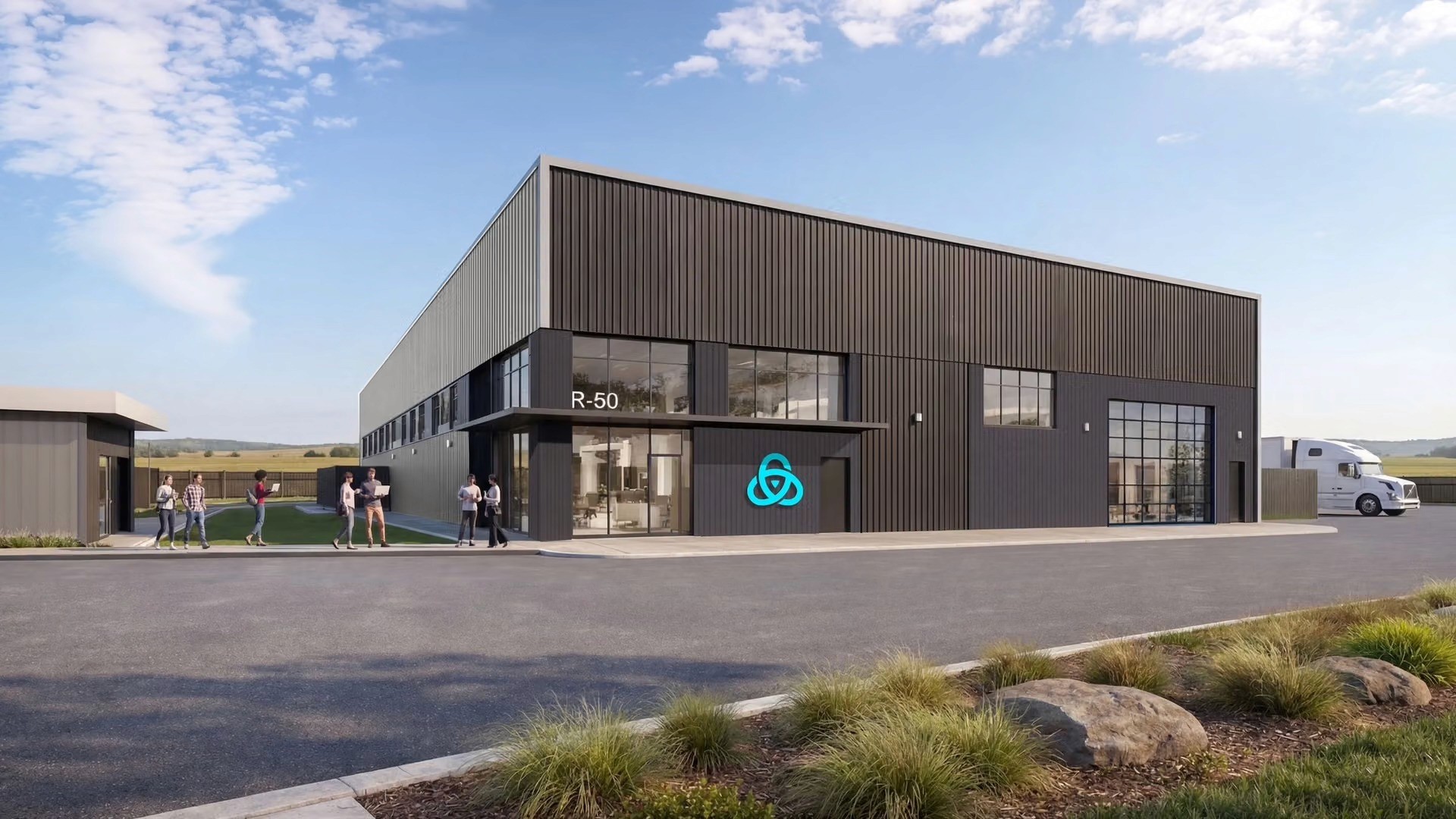
Rendering of Radiant’s R-50 Production Facility in Tennessee. Image Credit: Radiant
Valar Atomics
Valar was founded in 2023 by Isaiah Taylor. It is developing high-temperature gas-cooled reactors for data centres, industrial power and high-temperature process heat.
Ward 250 is a 100 kWt test reactor designed to demonstrate Valar’s TRISO-fuelled, helium-cooled technology. It reached criticality in June 2026 and then entered power testing. Valar plans to apply the technology to commercial systems producing up to around 5 MWe.
Valar has attracted unusually large amounts of private capital for a young nuclear company. This gives it resources for fuel, testing and manufacturing, but its commercial reactor remains at an early stage relative to the amount of capital raised.
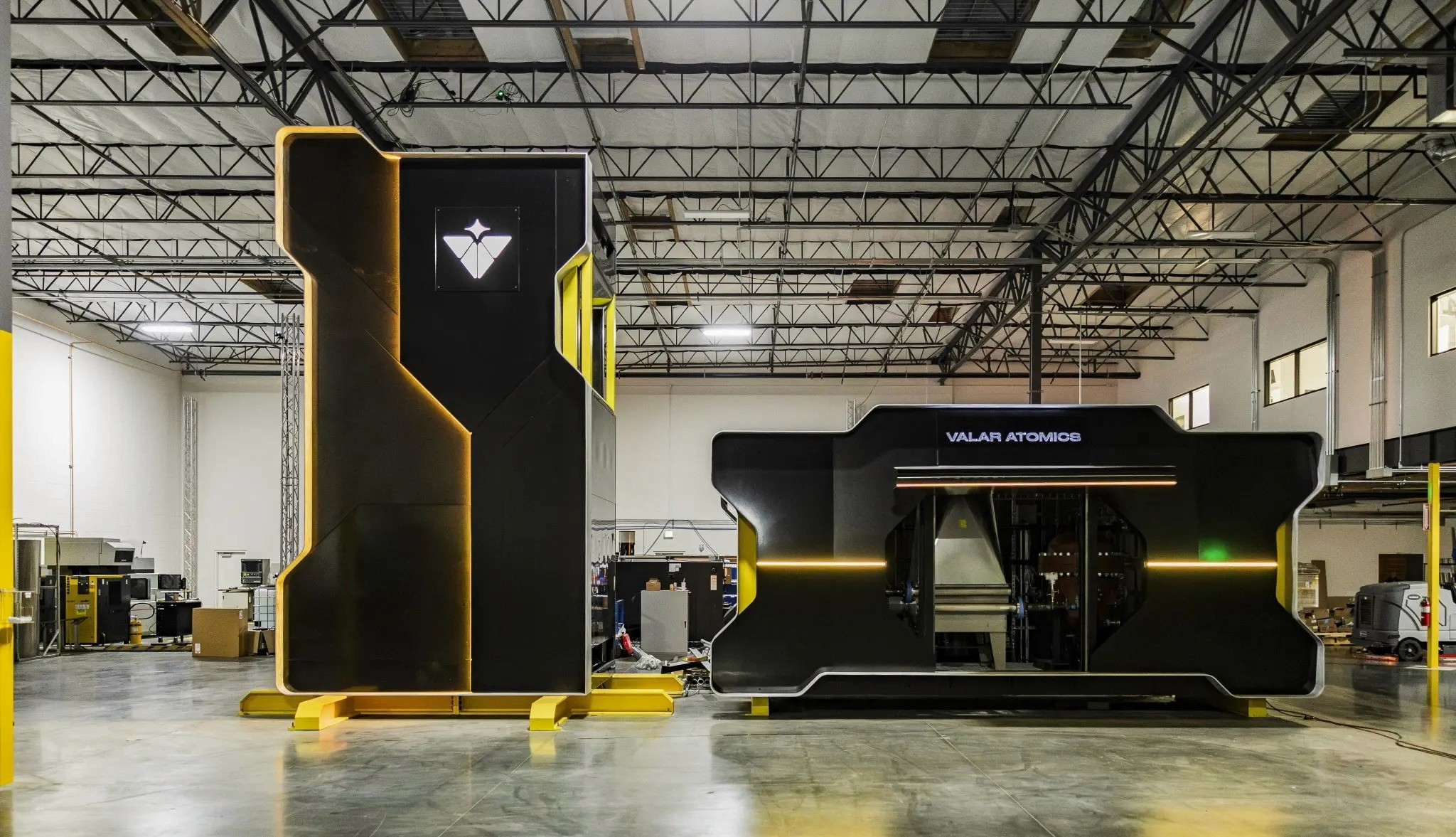
Valar Atomics’ Ward 250. Image Credit: Valar Atomics
4.3 Small SMR Developers
Small SMRs occupy the space between transportable microreactors and grid-scale plants. The companies in this category are developing reactors of approximately 10-75 MWe, large enough to serve data centres, industrial sites or local grids but small enough to be deployed incrementally.
Aalo Atomics
Aalo was founded in 2023 by Matt Loszak and Yasir Arafat. Arafat previously led the MARVEL microreactor programme at Idaho National Laboratory. Its principal product is the Aalo Pod, a 50 MWe plant assembled from five 10 MWe Aalo-1 reactors.
Aalo is positioning the Pod as a standardised power plant for data centres. The Aalo-X demonstration uses uranium-dioxide fuel enriched to approximately 5%, while the commercial Aalo Pod is expected to use 8%-enriched LEU+. This avoids specialised fuel forms such as TRISO, although commercial deployment of its sodium-cooled system remains unproven.
Its Aalo-X test reactor reached zero-power criticality in July 2026. The next step is demonstrating heat removal and electricity generation in a system that more closely represents the commercial plant.
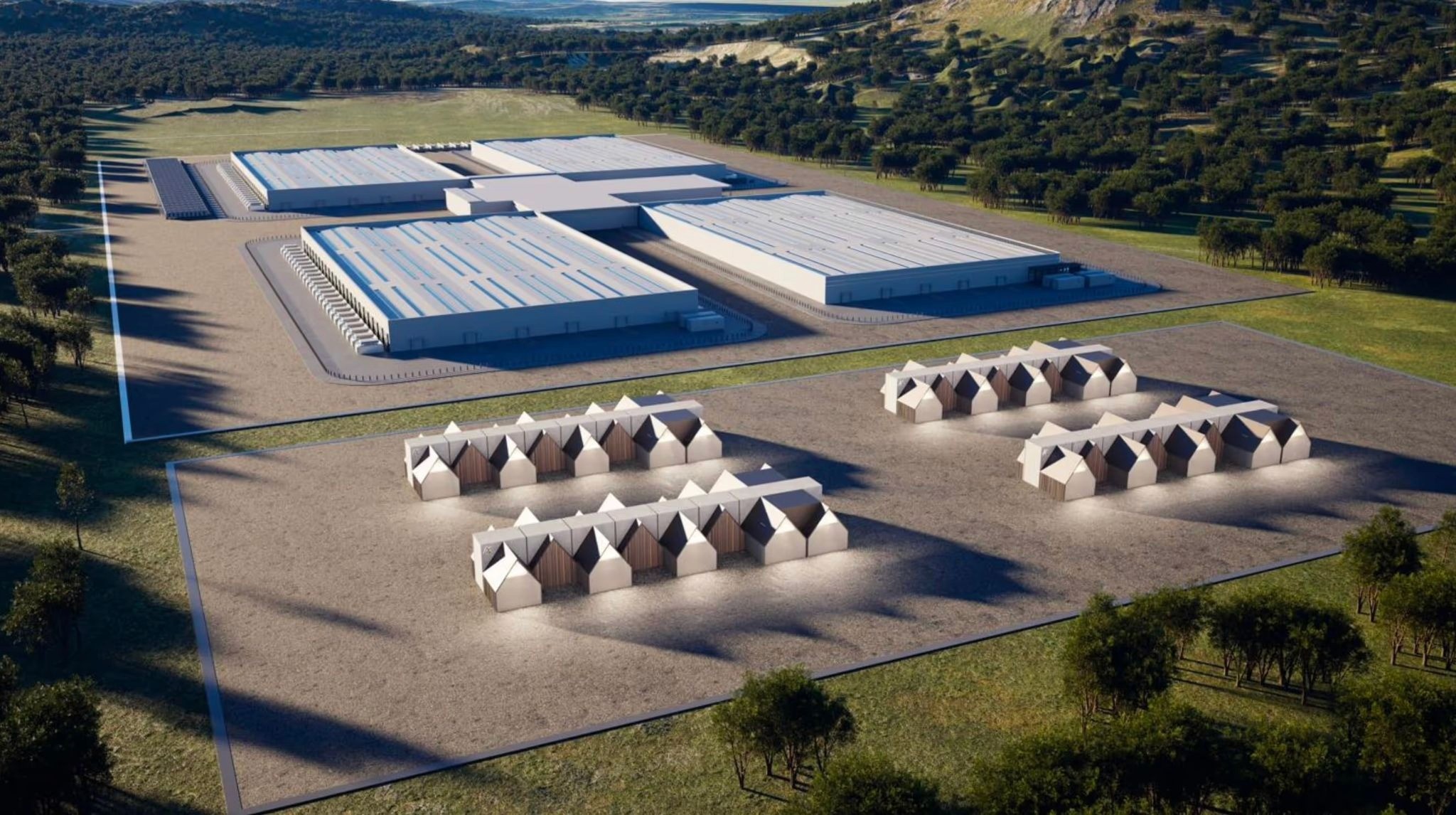
50 MWe Aalo Pod beside a data center. Image Credit: Aalo
Deep Fission (Nasdaq: FISN)
Deep Fission was founded in 2023 by Elizabeth and Richard Muller and is now publicly traded. Its Gravity Reactor combines a conventional pressurised-water reactor with deep-borehole and geothermal engineering.
Each reactor is designed to produce up to 15 MWe from a canister installed approximately one mile underground. At that depth, the water column provides pressure comparable with a conventional PWR, while the surrounding geology supplies shielding and physical protection.
The company has demonstrated the installation and retrieval of a full-scale non-nuclear canister and received approval for its DOE Nuclear Safety Design Agreement. It has not yet operated a nuclear prototype. The principal innovation therefore lies in how the reactor is installed rather than in the underlying fission technology.
Last Energy
Last Energy was founded in 2019 by Bret Kugelmass, who previously established the Energy Impact Center. Its PWR-20 is a 20 MWe pressurised-water reactor designed for industrial and data-centre customers.
Rather than introducing a new reactor physics concept, Last Energy is attempting to package established light-water-reactor technology into a smaller, standardised plant. The company plans to manufacture most components off-site and sell electricity through long-term contracts.
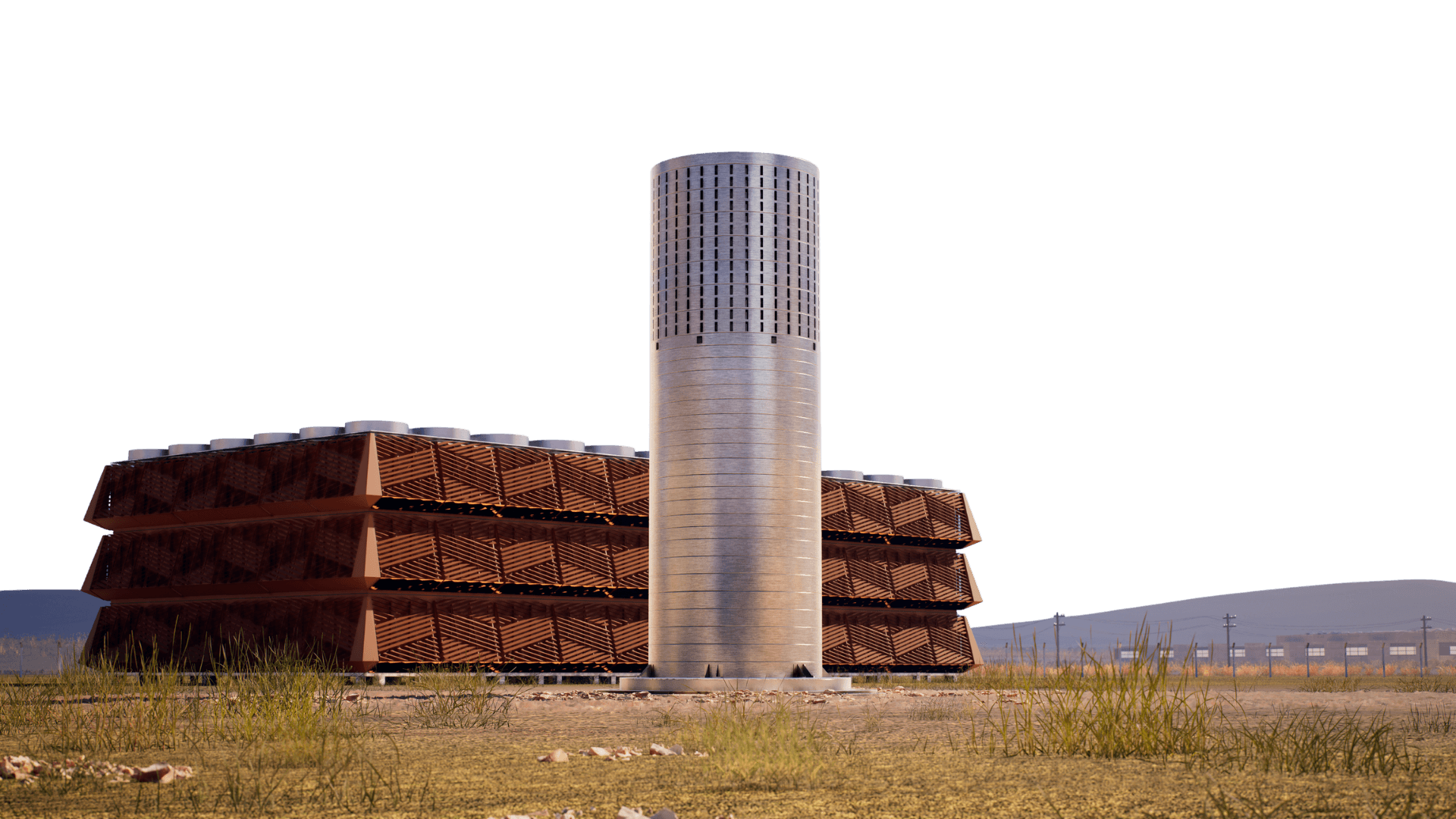
Last Energy’s PWR-20 and Modular Steam Plant. Image Credit: Last Energy
This approach reduces some technological risk but does not eliminate licensing, construction or financing risk. Last Energy must still demonstrate that a small PWR can be manufactured and installed repeatedly at a cost that compensates for its limited output.
Oklo (NYSE: OKLO)
Oklo was founded in 2013 by nuclear engineers Jacob DeWitte and Caroline Cochran and became publicly traded in 2024.
Its Aurora Powerhouse is a sodium-cooled fast reactor using metallic fuel, with planned configurations ranging from approximately 15 to 75 MWe. Oklo plans to own and operate its plants and sell electricity and heat through long-term contracts rather than sell the reactors themselves.
This model could simplify procurement for customers, but it requires Oklo to finance, license and operate the plants. The company has several prototype and commercial projects in development, but its Aurora system has not yet produced electricity.
4.4 Grid-Scale SMRs and Advanced Reactors
Grid-scale developers are building reactors for utilities, major industrial facilities and large data-centre campuses. Their projects require more capital than microreactors but can supply substantially more power from each plant.
TerraPower
TerraPower was founded in 2008 by Bill Gates, Nathan Myhrvold and nuclear engineer John Gilleland. Its Natrium plant is substantially larger than the reactors developed by the startup cohort.
Natrium combines a 345 MWe sodium-cooled fast reactor with molten-salt thermal storage. The storage system can temporarily increase plant output to approximately 500 MWe, allowing the reactor to produce heat steadily while electricity output responds to grid demand.
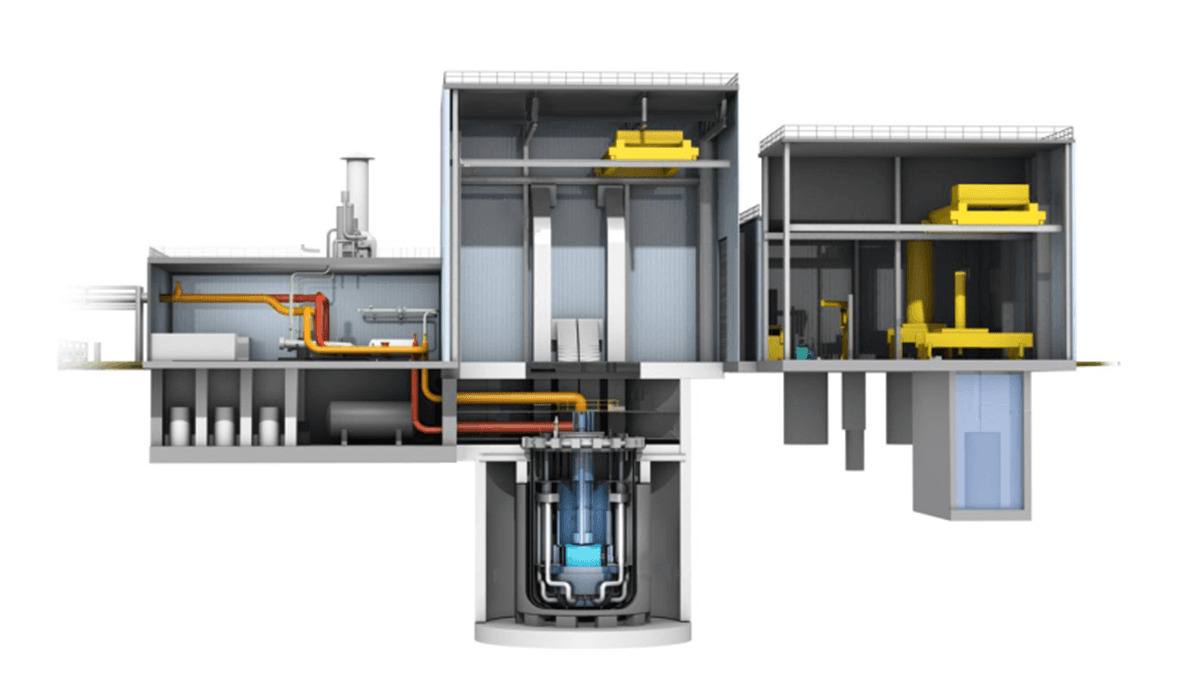
A cutaway diagram of the Natrium reactor. Image Credit: TerraPower
The first Natrium plant is under construction in Kemmerer, Wyoming, following receipt of an NRC construction permit. This places TerraPower ahead of most advanced-reactor developers in physical commercial deployment, although its utility-scale project also requires substantially more capital.
X-energy (NASDAQ: XE)
X-energy was founded in 2009 by Kam Ghaffarian and became publicly traded in April 2026. Its Xe-100 is an 80 MWe high-temperature gas-cooled reactor using helium coolant and TRISO fuel. Four units can form a 320 MWe plant.
The Xe-100 is designed to supply both electricity and high-temperature industrial heat. Its initial US project is being developed with Dow, while Amazon is supporting wider deployment for electricity and data-centre demand. X-energy also controls TRISO-X, its fuel-manufacturing subsidiary.
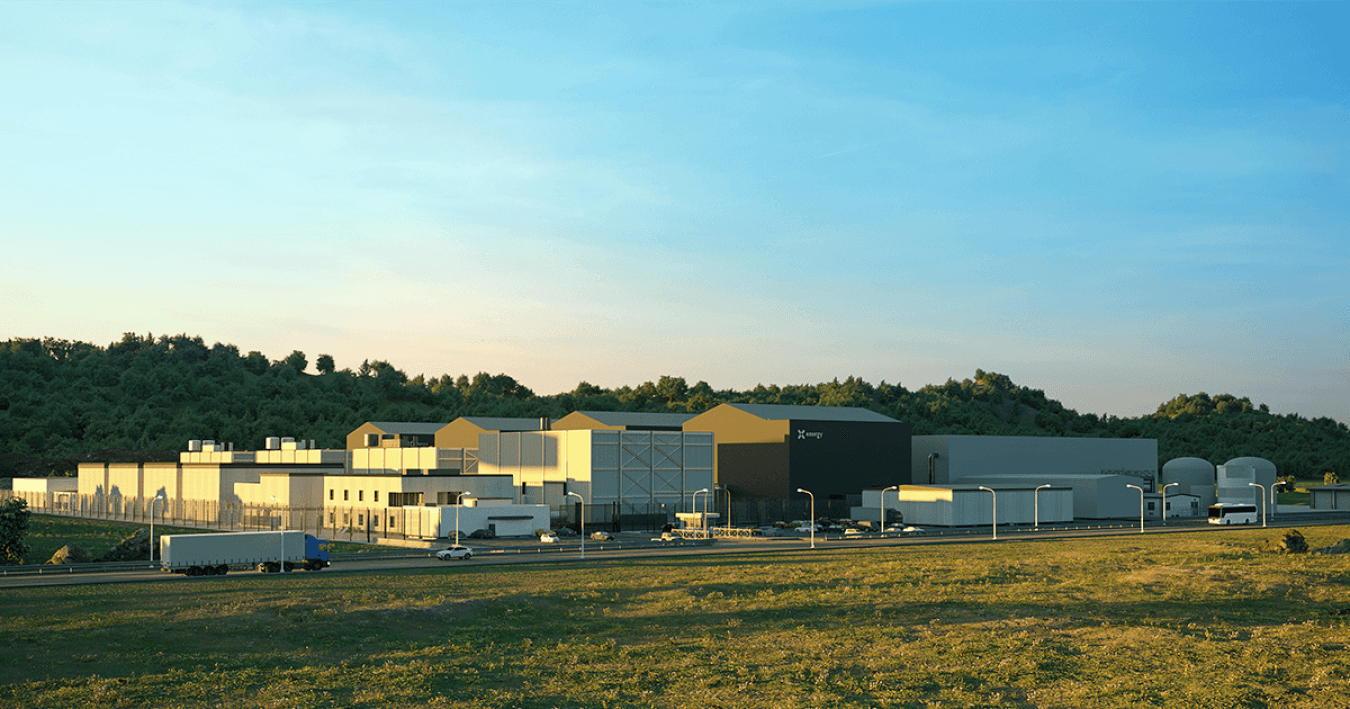
Xe-100 nuclear power plant rendering. Image Credit: X-Energy
This combination of reactor development, fuel manufacturing and large customers gives X-energy one of the sector’s more integrated strategies. Its first projects must still establish construction cost and operating performance.
Kairos Power
Founded in 2016, Kairos Power is developing fluoride-salt-cooled reactors using TRISO fuel. Its Hermes programme in Tennessee uses a series of test reactors to generate operating and licensing experience before commercial deployment.
Kairos was the first US developer in more than 50 years to receive an NRC construction permit for a non-water-cooled reactor. An agreement with Google supports up to 500 MWe of future capacity, beginning with a planned 50 MWe project supplying electricity through the Tennessee Valley Authority.
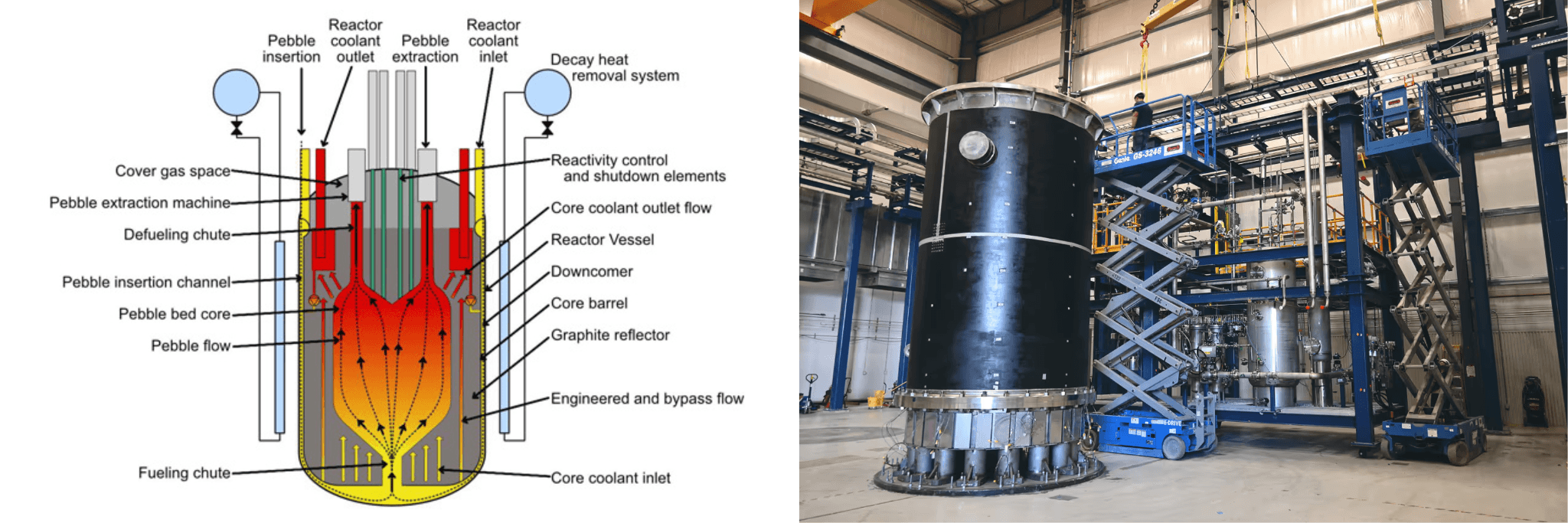
Hermes Reactor design (left), Hermes Reactor (right). Image Credits: Wikipedia, Kairos Power
Among established vendors, GE Vernova Hitachi’s 300 MWe BWRX-300 is under construction in Canada and draws on an existing boiling-water-reactor supply chain. Westinghouse is developing both the proposed 300 MWe AP300 and the approximately 5 MWe eVinci microreactor.
4.5 The enabling supply chain
Advanced reactors also depend on companies that enrich uranium, manufacture specialized fuel and produce nuclear-grade components. HALEU and TRISO capacity is especially important because supply remains limited.
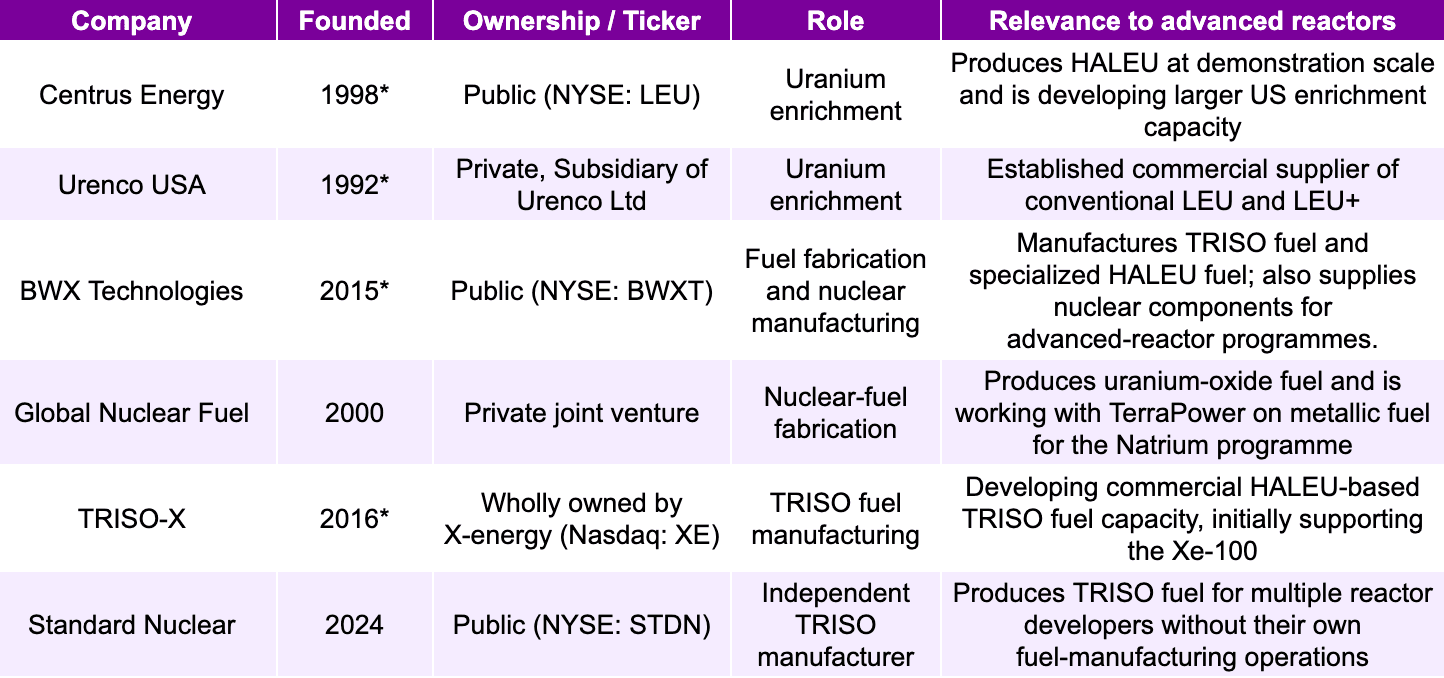
Table 9: Selected advanced-nuclear fuel and manufacturing companies. © 2026 Jarsy Research
*Urenco USA’s operating company was formed in 1992; its enrichment plant began operating in 2010. BWXT became an independent company in 2015 but has much older industrial roots. TRISO-X production development began in 2016.
These suppliers are essential to commercialization: a reactor may be ready before sufficient fuel or manufacturing capacity is available.
4.6 Comparing the Principal Developers
The companies covered in this chapter vary widely in reactor size, technology, funding and development maturity. The table below provides a consolidated comparison.
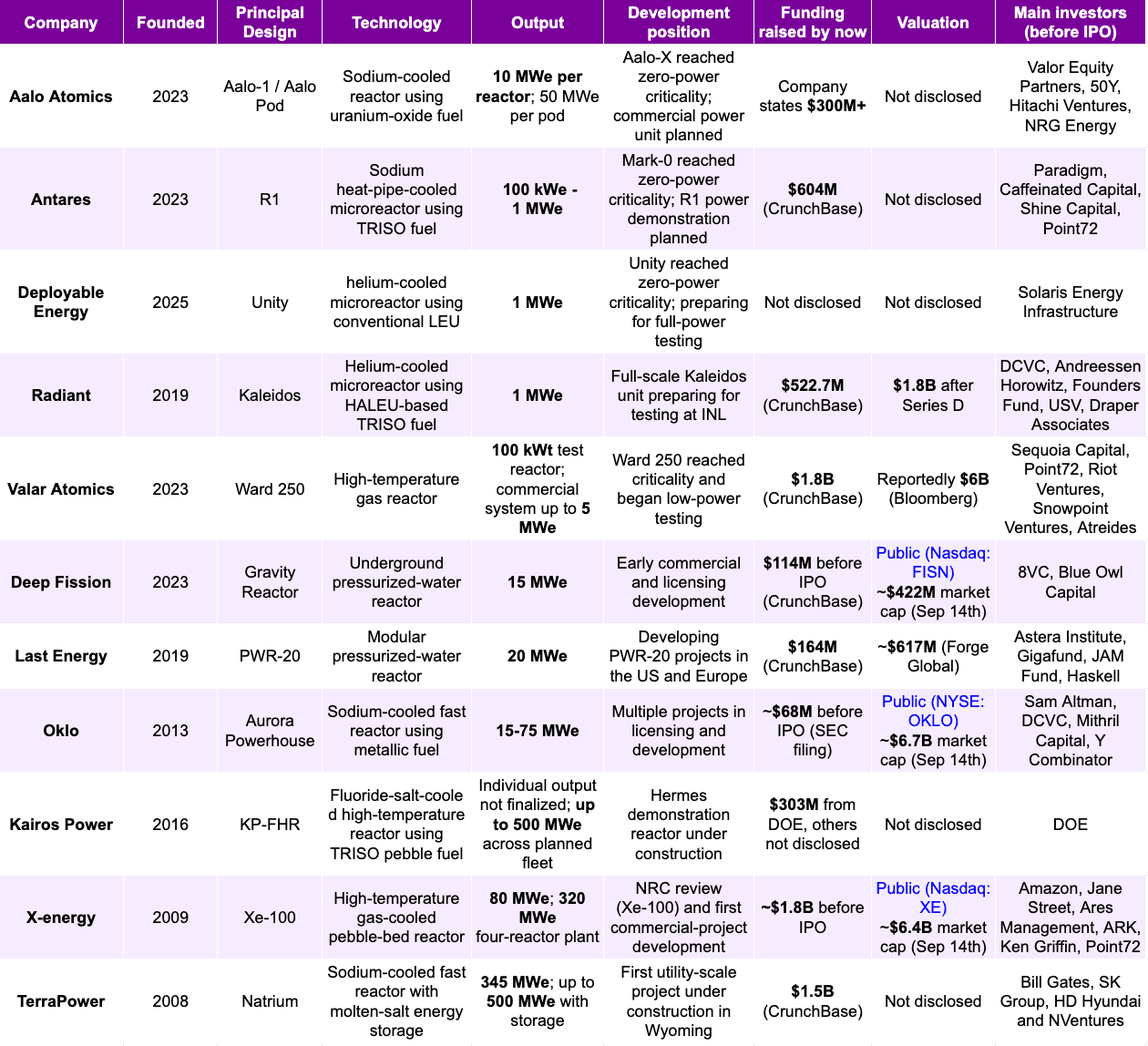
Table 10: Comparison of selected advanced-reactor developers by product, technology, development status and capital raised. Sources: CrunchBase, SEC, company websites, Forge Global, Bloomberg.
© 2026 Jarsy Research
Chapter 5. Bottlenecks and Outlook
Advanced nuclear has made meaningful progress, but no new developer has yet demonstrated the complete path from reactor design to licensed, repeatable and profitable deployment. The outcome will depend principally on fuel, financing, licensing, manufacturing and customer demand.
5.1 Fuel
Many advanced reactors require HALEU to support smaller cores, longer fuel cycles and advanced fuel forms, but US output remains far below projected demand. Centrus has produced a cumulative total of more than 1,900 kilograms and plans to build 12 tonnes of annual capacity for enrichment up to 19.75%. Urenco USA has begun producing LEU+ and is authorised to enrich uranium to 10%. By comparison, DOE estimates that US HALEU demand could exceed 50 tonnes annually by 2035.
Enrichment is only one constraint: the material must also be converted, fabricated into reactor-specific fuel and transported. Designs using conventional LEU or LEU+ generally face less near-term supply risk than those dependent on higher-assay fuel.
5.2 Financing and licensing
The Reactor Pilot Program accelerates testing but does not fund participating companies or provide an NRC commercial licence. Developers must still finance construction and complete the applicable NRC process.
Part 53 offers a more flexible licensing framework, but it has not yet been tested through a complete commercial application. The first reactor to move successfully from demonstration to commercial approval will therefore be an important industry milestone.
5.3 Manufacturing and public confidence
Small reactors spread fixed costs across fewer kilowatts. Developers aim to overcome this disadvantage through standardised designs, factory production and repeat orders that reduce unit costs. This model remains unproven: Radiant, for example, intends to produce up to 50 reactors annually, but reaching that scale will require sufficient repeat orders.
Modern designs may improve safety, but public confidence remains fragile. A serious incident or the perception of weakened regulation could affect the entire sector.
5.4 Outlook: What to Watch
The industry’s next phase will be measured by full-power operation, commercial licensing, fuel production, customer commitments and repeat construction.
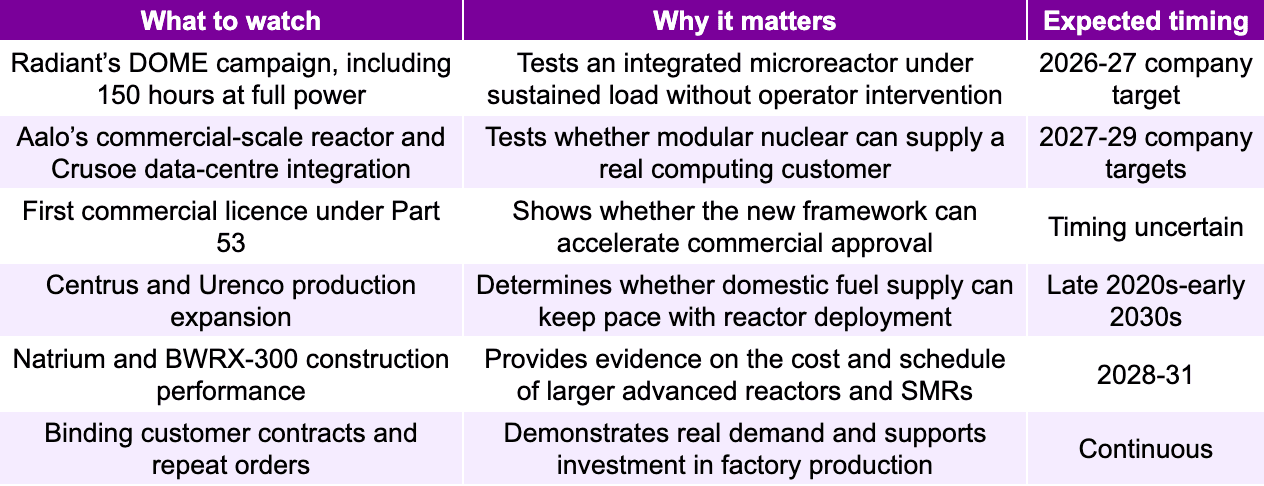
Table 11: Key milestones to watch in advanced nuclear deployment. © 2026 Jarsy Research
We will continue to follow these companies and assess whether their progress translates into licensed reactors, reliable fuel supply, binding customer demand and repeatable commercial deployment.
Further reading: