From restoring sight to decoding speech, brain-computer interfaces are moving from lab curiosity to clinical reality. We profile the companies leading the charge, and the billions flowing in behind them.
1. A Brief History of Brain-Computer Interfaces
The idea of connecting the human brain directly to a machine is far older than most people realize. In 1924, German psychiatrist Hans Berger recorded the first human electroencephalogram (EEG), proving that the brain’s electrical activity could be measured from the scalp. For decades, this remained a diagnostic curiosity, useful for detecting epilepsy or sleep disorders, but not for interfacing with computers.
The Foundational Decades (1960s-1990s)
In 1969, Eberhard Fetz at the University of Washington demonstrated that a monkey could learn to control the firing rate of a single neuron to move a needle on a meter—the first proof that the brain could intentionally control an external device through neural feedback. Through the 1970s and 1980s, researchers like Jacques Vidal at UCLA coined the term “brain-computer interface” and began exploring how EEG signals could be translated into simple computer commands.
The real breakthrough came in 1998, when Philip Kennedy implanted the first long-term BCI electrode in a locked-in patient, enabling him to move a cursor on a screen using thought alone. That same year, neuroscientist John Donoghue began developing what would become BrainGate, a system that would eventually allow paralyzed patients to control robotic arms, type on screens, and even browse the internet—all through neural signals decoded from a tiny array of electrodes implanted in the motor cortex.
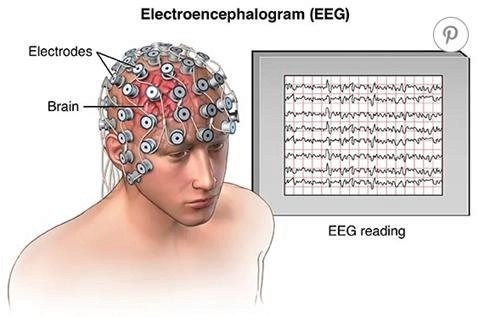
EEG. Image Credit: www.brightbraincentre.co.uk
The Modern Era: From Research to Product (2016-Present)
For nearly two decades after BrainGate, BCIs remained confined to academic labs—expensive, fragile, and available to only a handful of research participants. The turning point came in 2016, when Elon Musk co-founded Neuralink with the explicit goal of making BCIs a consumer product. Suddenly, the field had Silicon Valley’s attention and its capital.
The floodgates have since opened. In 2025 alone, BCI startups raised over $1.4 billion in venture funding, triple the prior year. Neuralink, Science Corp, Paradromics, and Precision Neuroscience all performed human procedures. And in January 2026, Sam Altman co-founded Merge Labs with a $252 million seed round (the largest seed in BCI history) signaling that the AI world now sees brain interfaces as the next frontier.
The question is no longer whether BCIs will work. It’s how fast they’ll scale, and who will build the platforms that define the industry.
2. The BCI Market: A Sector in Hypergrowth
Brain-computer interface funding has undergone a dramatic acceleration. According to Crunchbase data, total neurotechnology funding reached approximately $896 million in 2024 and surged to $1.4 billion in 2025, driven largely by Neuralink’s $650 million Series E round at a $9.7 billion valuation. With Science Corp’s $230 million Series C and Merge Labs’ $252 million seed round in early 2026, the sector shows no signs of slowing.
At least 15 institutional investors closed BCI deals from 2025 to 2026, including Lux Capital, Khosla Ventures, Founders Fund, ARK Invest, and Sequoia Capital. Johnson & Johnson’s $14.6 billion acquisition of Intra-Cellular Therapies in January 2025 further signaled that Big Pharma sees neurotechnology as strategically important.
Three macro trends are converging to drive this acceleration: FDA’s increasing willingness to grant Breakthrough Device Designations for neural interfaces, advances in AI enabling real-time neural decoding at unprecedented accuracy, and growing demand from patients with ALS, spinal cord injuries, and neurodegenerative conditions who have no existing therapeutic options.
Credits: Crunchbase, TechCrunch, Jarsy Research
3. Five Companies Defining the BCI Frontier
Three macro trends are converging to drive this acceleration: FDA’s increasing willingness to grant Breakthrough Device Designations for neural interfaces, advances in AI enabling real-time neural decoding at unprecedented accuracy, and growing demand from patients with ALS, spinal cord injuries, and neurodegenerative conditions who have no existing therapeutic options.
A, Neuralink: The Flagship That Started the Gold Rush
Technology: Neuralink’s N1 implant uses 1,024 flexible electrode threads, each thinner than a human hair, inserted into the brain by a custom-built surgical robot. The implant sits flush with the skull and communicates wirelessly with external devices, enabling paralyzed patients to control computers, phones, and other digital tools using thought alone.
Clinical Progress: As of late 2025, twelve patients worldwide have received Neuralink implants—including individuals with ALS and spinal cord injuries across the United States, the UK, the UAE, and Canada. Early results have been striking: the first UK participant successfully controlled a computer with his thoughts within hours of surgery.
What’s Next: In January 2026, Musk announced that Neuralink will begin high-volume production and move to a nearly fully automated surgical procedure in 2026. The company’s Blindsight implant for restoring vision in the completely blind is expected to enter human trials in 2026. Over 10,000 people are reportedly on the waiting list.
Outlook: Neuralink’s advantages are clear: massive funding, brand recognition, a bespoke surgical robot, and the broadest clinical footprint in the industry. If Neuralink achieves automated, high-throughput implantation, it could define the standard of care for severe paralysis within this decade.
B, Science Corp: First to Market with a Vision BCI
Technology: Science Corp’s flagship product, PRIMA, is a retinal implant smaller than a grain of rice. It contains 378 pixels, each equipped with a tiny electrode. When infrared light from camera-equipped smart glasses hits a pixel, the attached electrode stimulates cells in the patient’s retina, substituting tissue lost to disease.
Clinical Evidence: Results from the pivotal PRIMA clinical trial were published in the New England Journal of Medicine, demonstrating that the implant restored functional vision in patients with age-related macular degeneration. PRIMA is the first vision prosthesis to provide “form vision” - patients could recognize letters and read.
Path to Commercialization: Science Corp has submitted a CE mark application to the European Union and expects approval by mid-2026, with Germany as the likely first market. If this timeline holds, Science Corp would become the first BCI company in history with a commercially available product.
Outlook: Founded by Max Hodak and Alan Mardinly, both former Neuralink executives, Science Corp combines deep technical roots with a pragmatic commercial strategy. The $230 million Series C at a $1.5 billion valuation, announced in March 2026, reflects investor confidence in this approach.
C. Merge Labs: Altman’s Bet on Non-Invasive Fusion
Technology: While most BCI companies require brain surgery, Merge Labs is pursuing an entirely different paradigm: non-invasive interfaces that connect with neurons using molecules instead of electrodes, transmitting and receiving information using deep-reaching modalities like ultrasound.
The AI Connection: Co-founded by Sam Altman alongside Alex Blania (co-founder of Tools for Humanity / Worldcoin), the company received its largest check from OpenAI itself. Valve’s Gabe Newell and Bain Capital also invested. The founding thesis: as AI becomes more powerful, the bandwidth between human brains and AI systems becomes the bottleneck.
Outlook: Merge Labs is candid that its technology may take “decades rather than years” to deliver. This is a moonshot—but a $252 million moonshot backed by some of the most consequential figures in technology. If non-invasive BCIs prove feasible, they would unlock a market orders of magnitude larger than surgical implants.
D. Precision Neuroscience: The Minimally Invasive Middle Path
Technology: Precision Neuroscience’s Layer 7 Cortical Interface sits on the brain’s surface, slipped beneath the skull through a small slit without requiring a full craniotomy. Each array contains up to 1,024 platinum electrodes and offers submillimeter spatial resolution.
Regulatory Progress: Precision has been evaluated in over 37 patients across four major U.S. institutions. In April 2025, the FDA granted 510(k) clearance for the Layer 7 array for implantation durations up to 30 days—the first full regulatory clearance for a next-generation wireless BCI.
The Medtronic Partnership: In January 2026, Precision announced a strategic partnership with Medtronic to integrate the Layer 7 interface with Medtronic’s StealthStation surgical navigation platform, dramatically accelerating potential adoption.
Outlook: Founded by Benjamin Rapoport, also a founding member of Neuralink, Precision is betting that minimally invasive beats maximally capable. If the trade-off between resolution and accessibility favors accessibility—as it has in nearly every medical device category—Precision may have the winning formula.
E: Paradromics: High-Bandwidth Speech Restoration
Technology: Paradromics’ Connexus system is the only fully implantable BCI that has received FDA IDE approval specifically for speech restoration. Its micro-electrode arrays capture brain activity from individual neurons at an industry-leading 200+ bits per second data transfer rate in pre-clinical models.
Clinical Milestones: In May 2025, Paradromics performed its first human implantation at the University of Michigan. In November 2025, the FDA granted IDE approval for the Connect-One Early Feasibility Study. Clinical sites include the University of Michigan, Massachusetts General Hospital, and UC Davis.
Outlook: Paradromics occupies a strategic niche: speech is arguably the highest-value function a BCI can restore, and the company is first to secure FDA approval in this specific indication. With relatively modest funding compared to Neuralink or Merge Labs, Paradromics has achieved outsized clinical milestones.
Approach Compared
The Medtronic Partnership: In January 2026, Precision announced a strategic partnership with Medtronic to integrate the Layer 7 interface with Medtronic’s StealthStation surgical navigation platform, dramatically accelerating potential adoption.
Outlook: Founded by Benjamin Rapoport, also a founding member of Neuralink, Precision is betting that minimally invasive beats maximally capable. If the trade-off between resolution and accessibility favors accessibility—as it has in nearly every medical device category—Precision may have the winning formula.
The five companies profiled above represent fundamentally different bets on how humans will interface with machines:
Credits: Company filings, FDA databases, Jarsy Research
4. Looking Ahead
The brain-computer interface industry in 2026 feels like smartphones in 2007: the technology works, investment is surging, and multiple paths forward are taking shape—each with the potential to succeed in different ways.
Several inflection points loom in the near term. If Science Corp secures its CE mark by mid-2026, it becomes the first company to sell a BCI commercially, reshaping regulatory and reimbursement landscape for every competitor. If Neuralink achieves automated, high-throughput surgery, it could dramatically lower the cost and complexity of implantation. And if Merge Labs’ non-invasive approach shows early promise, it could open up consumer applications that invasive BCIs cannot reach.
The regulatory environment is also evolving. The U.S. Senate's proposed MIND Act would establish new oversight frameworks specifically for BCIs. And China’s growing investment suggests a geopolitical race akin to AI.
The brain may be ready to be read. What emerges next may not be a single system, but an entirely new layer of computing.