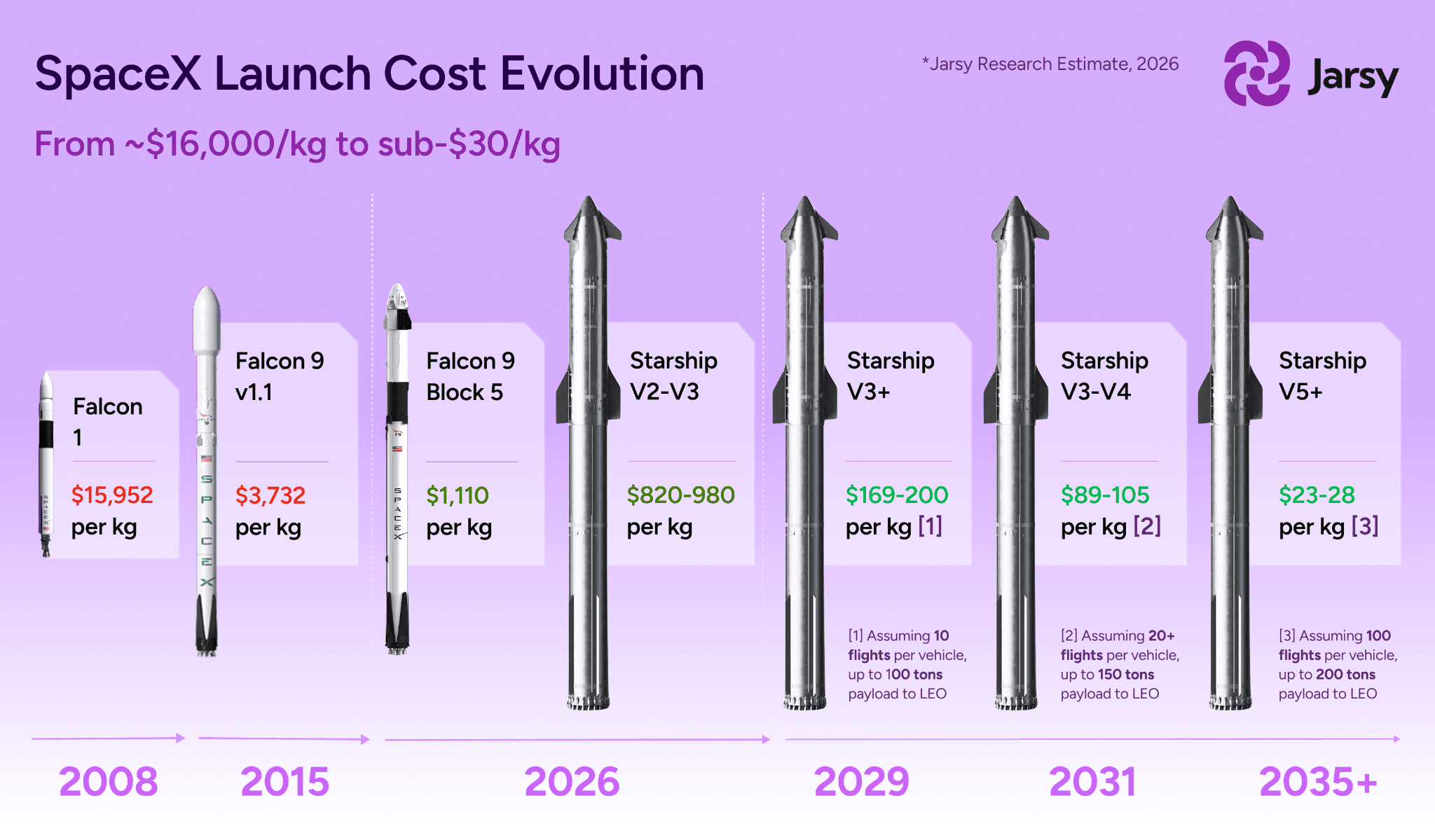
From ~$16,000/kg on Falcon 1 to a projected <$200/kg on Starship, how SpaceX is using material science, engine architecture, and radical reusability to collapse the cost of access to space, and what it could mean for the future of orbital computing. Copyright © Jarsy Research
The economics of spaceflight may be approaching a structural inflection point. In late 2025, Google Research’s “Suncatcher” paper argued that orbital-scale AI infrastructure becomes economically viable once launch costs fall toward the ~$200/kg range, where space-based solar power can begin competing with terrestrial data-center electricity costs.
SpaceX is attempting to reach that threshold through Starship, a fully reusable super-heavy launch system designed to carry 100-150 tonnes to low Earth orbit. Unlike previous partially reusable rockets, Starship aims to reuse both the booster and upper stage at aircraft-like flight cadence, potentially reducing launch costs by another order of magnitude beyond Falcon 9.
This report examines SpaceX’s evolution from Falcon 1 and Falcon 9 to Starship, the engineering innovations intended to enable full rapid reuse, and how falling launch costs could reshape the economics of orbital infrastructure. It also explores how Starlink may enable large-scale computing and AI infrastructure in space.
1. The Cost Curve: From Falcon 1 to Starship
Over the past two decades, SpaceX has driven the cost of reaching low Earth orbit from roughly $16,000/kg down to under $1,200/kg on Falcon 9 (reused), and is now targeting sub-$200/kg on Starship.
1.1 Falcon 1 (2006 - 2009): Proving the Model
Falcon 1 was SpaceX’s proof of concept: a small, expendable, two-stage rocket powered by a single Merlin 1A engine. It failed three times before reaching orbit on its fourth attempt in September 2008, making SpaceX the first privately funded company to place a payload into Earth orbit.
The vehicle could lift 420 kg to low Earth orbit for about $6.7 million per launch, or roughly $15,950/kg. That was already cheaper than legacy rockets like the Delta II ($25,000-40,000/kg), but Falcon 1’s limited payload capacity prevented meaningful economies of scale. Its real value was strategic: it proved SpaceX could design, build, and fly an orbital rocket, while validating the Merlin engine architecture that later scaled into Falcon 9.
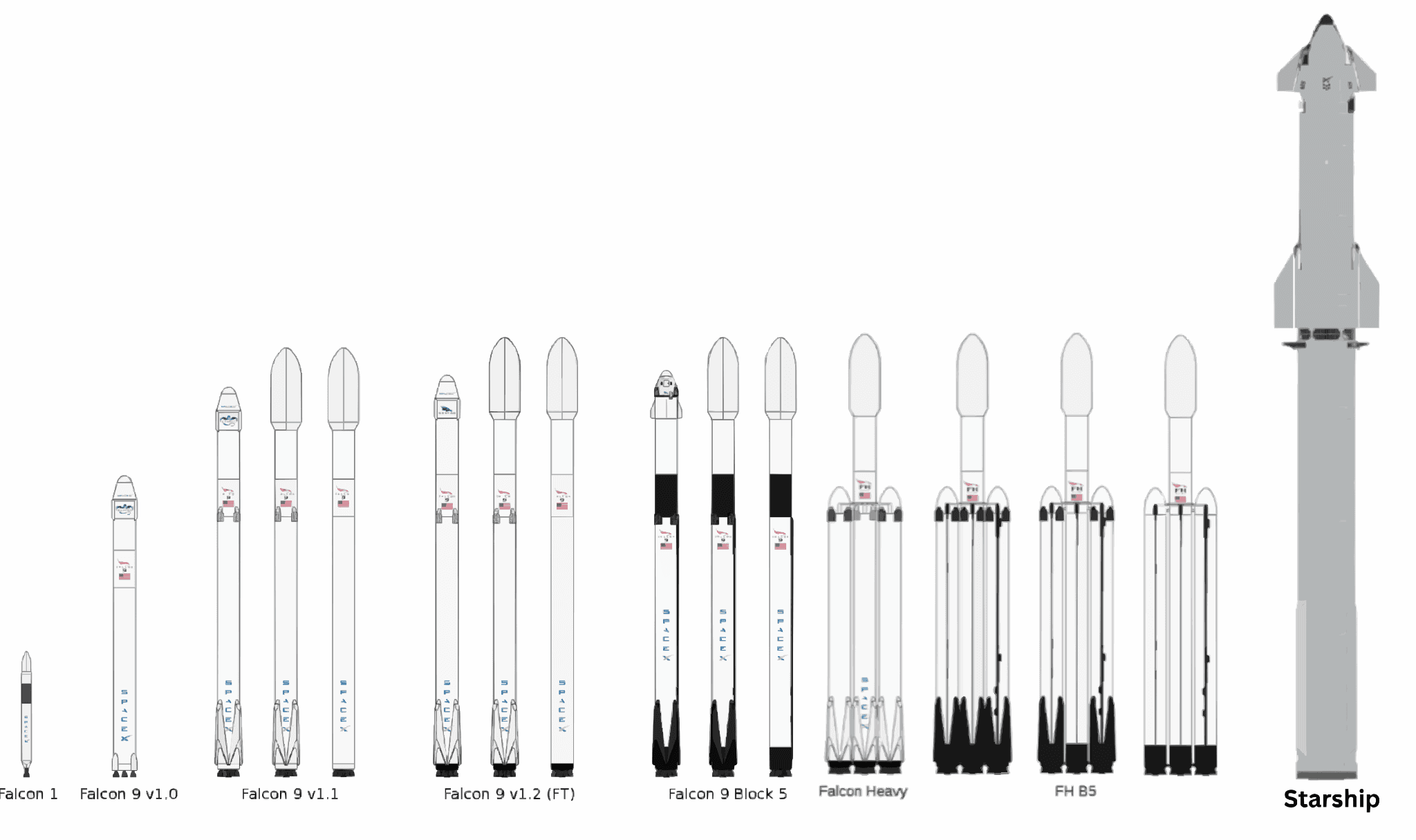
SpaceX Launch Vehicles. Image Credit: Wikipedia
1.2 Falcon 9 (2010 - 2016): Early Models
Falcon 9 marked SpaceX’s transition from a small experimental rocket to a scalable medium-lift vehicle using nine Merlin engines on its first stage. The original Falcon 9 v1.0 debuted in 2010, while the upgraded v1.1 introduced stretched tanks, Merlin 1D engines, and the octaweb layout, raising payload capacity to 13,150 kg to low Earth orbit.
At a launch price of $61.2 million (our estimated internal cost of ~$49 million), Falcon 9 v1.1 achieved a cost of roughly $3,732/kg, more than 4 times cheaper than Falcon 1, driven mainly by larger payload scale. During this period, SpaceX also began early booster recovery experiments, including ocean soft-landings and barge landing attempts, laying the groundwork for reusability.
1.3 Falcon 9 Full Thrust (2015 - Present): The Breakthrough
In 2015, Falcon 9 Full Thrust introduced densified propellants that significantly increased payload capacity, while also achieving the first successful landing of an orbital-class booster. The design evolved into Falcon 9 Block 5 in 2018, engineered for rapid, repeated reuse with minimal refurbishment.
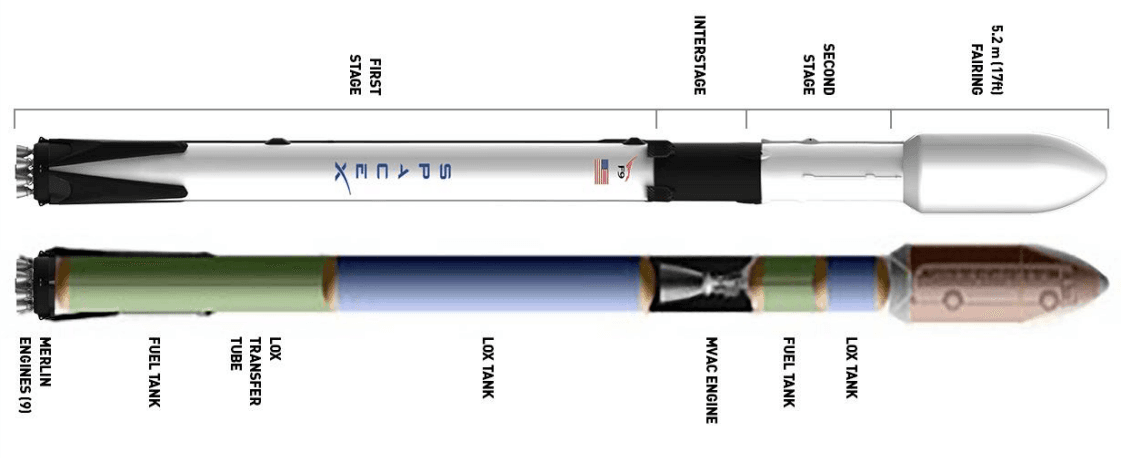
Falcon 9 Block 5. Image Credit: SpaceX
Block 5 can deliver 22,800 kg (17,500 kg for reused) to low Earth orbit at a listed launch price of $74 million, or $3,246/kg. But our research estimated SpaceX’s actual internal launch cost to be far lower, considering reusing both the booster (first stage) and the fairings. That likely brings the real cost around ~$1,110/kg (19.4 million divided by 17,500 kg) or lower, making Falcon 9 dramatically cheaper than previous rockets. Reusability transformed the booster from a disposable expense into a reusable capital asset, creating the margins that now fund both Starlink and Starship development.
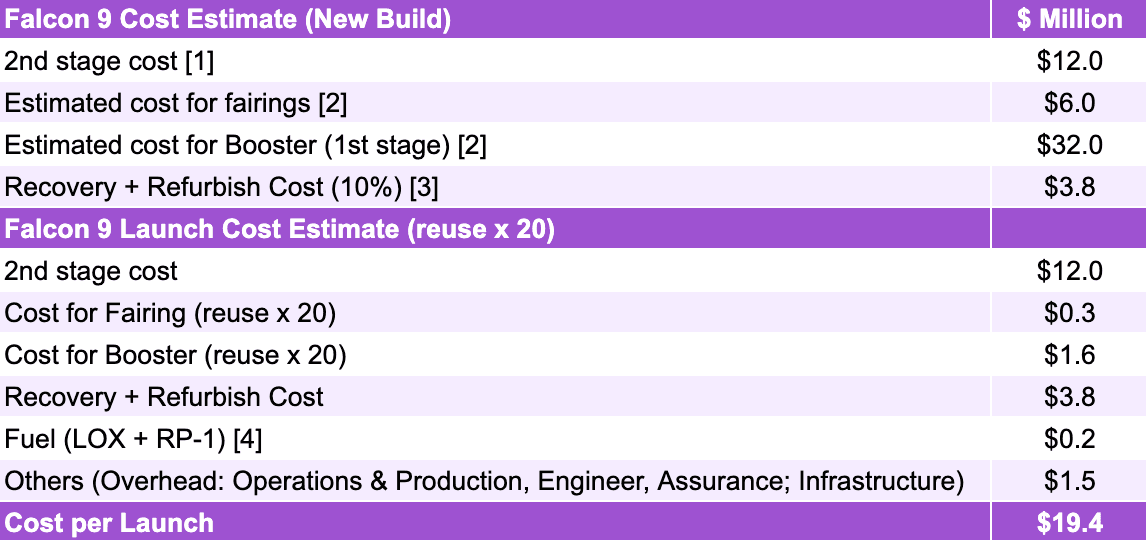
Sources: [1] SpaceX COO Gwynne Shotwell interview, Mountain Connect 2024; [2] Elon Musk Talk @ ISS R&D Conference, 2017; [3] Elon’s X post; [4] Estimation see below. Copyright © Jarsy Research

Sources: Wikipedia, space.stackexchange.com, www.imarcgroup.com/oxygen-pricing-report. Copyright © Jarsy Research
1.4 Starship (2023 - Present): Toward Full Reusability
Starship is a two-stage fully reusable (aim) rocket system consisting of the Super Heavy booster and the Starship upper stage. At 121 meters tall with 39 Raptor engines, it is the largest and most powerful reusable rocket ever built. Starship represents a major shift in launch economics. With a projected payload capacity of 100-150 tonnes to low Earth orbit, full reusability could dramatically reduce the cost of access to space.
Starship remains in an experimental phase, with estimated launch costs today around $82-98 million per flight. Assuming a 100-tonne payload to low Earth orbit, that implies a cost of roughly $820-980/kg for a single-use launch. The next chapter examines how SpaceX plans to achieve full reusability and further reduce launch costs through Starship’s engineering and operational design.
SpaceX Launch Cost by Vehicle

Sources: SpaceX, Wikipedia, Elon’s X post, Setbase.com.Copyright © Jarsy Research
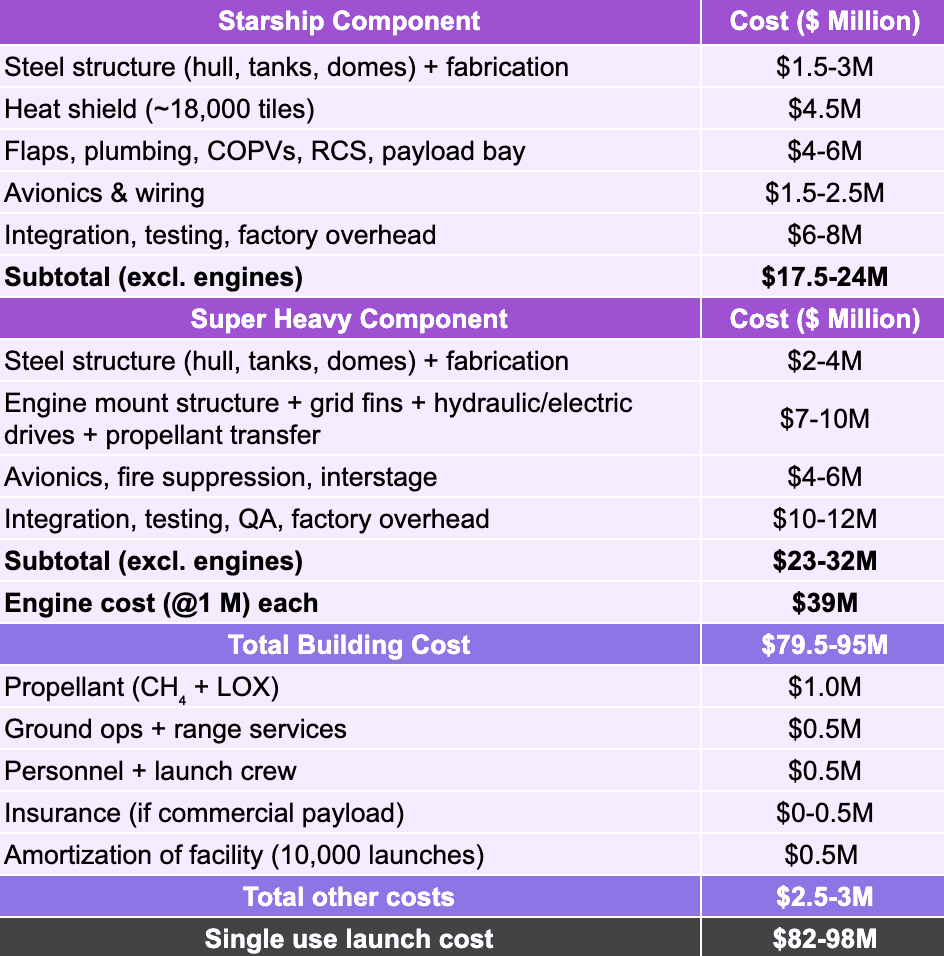
Starship cost estimates by Jarsy. Copyright © Jarsy Research
2. Starship: The Architecture for Sub-$200/kg
Starship represents SpaceX’s bet that a fully reusable, high-cadence launch system can reduce launch costs by an order of magnitude relative to Falcon 9. As of May 2026, SpaceX has conducted 11 Starship test flights, with the upgraded V3 variant and Raptor 3 engines now entering testing.
2.1 The Reusability Problem
Reducing launch costs to ~$200/kg is not simply about building a bigger rocket. The challenge is building one that can survive reentry and rapidly fly again without extensive refurbishment, something the space industry has struggled with for decades. NASA’s Space Shuttle required intensive heat-shield maintenance between flights, while Falcon 9 avoids the hardest part of the problem by discarding its upper stage.
A fully reusable rocket must solve three problems simultaneously: thermal protection, materials that can tolerate both cryogenic fuel and reentry heating, and engines that combine high performance with rapid reuse. SpaceX Starship attempts to address these challenges through stainless steel structures, the full-flow staged combustion Raptor engine, and a reusable heat shield. The following sections examine each in detail.
2.2 Material Choice: Why Starship Uses Stainless Steel
Early versions of Starship were originally designed around carbon fiber composites. SpaceX even built prototype composite tanks before switching in 2018 to stainless steel after concluding that carbon fiber was too expensive, difficult to manufacture at Starship’s scale, and poorly suited for rapid reuse.
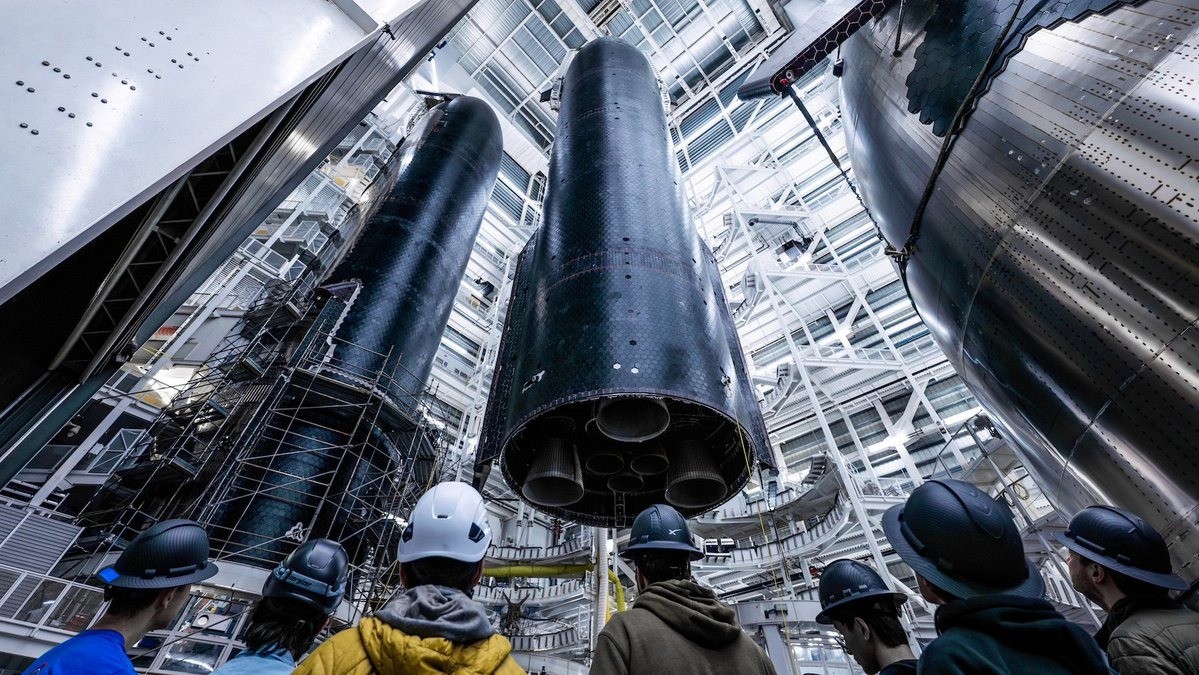
Image Credit: @XFreeze from X.com
Instead, SpaceX adopted a custom stainless steel alloy, internally referred to as “30X”, derived from alloy 304L. While steel is heavier than aerospace aluminum-lithium or carbon composites, Starship optimizes for cost per flight rather than minimum weight.
Stainless steel offers several advantages. It becomes stronger at cryogenic temperatures, tolerates far higher reentry heat than aluminum-lithium alloys, and is dramatically cheaper than carbon fiber. It can also be welded, repaired, and manufactured using relatively simple industrial processes, allowing SpaceX to build Starship with rolled steel rings instead of expensive autoclaves and specialized composite tooling.
SpaceX offsets steel’s higher weight through Starship’s large size, efficient methane engines, and planned orbital refueling architecture. At Starship’s scale, reducing manufacturing and refurbishment cost matters more than minimizing structural mass alone.
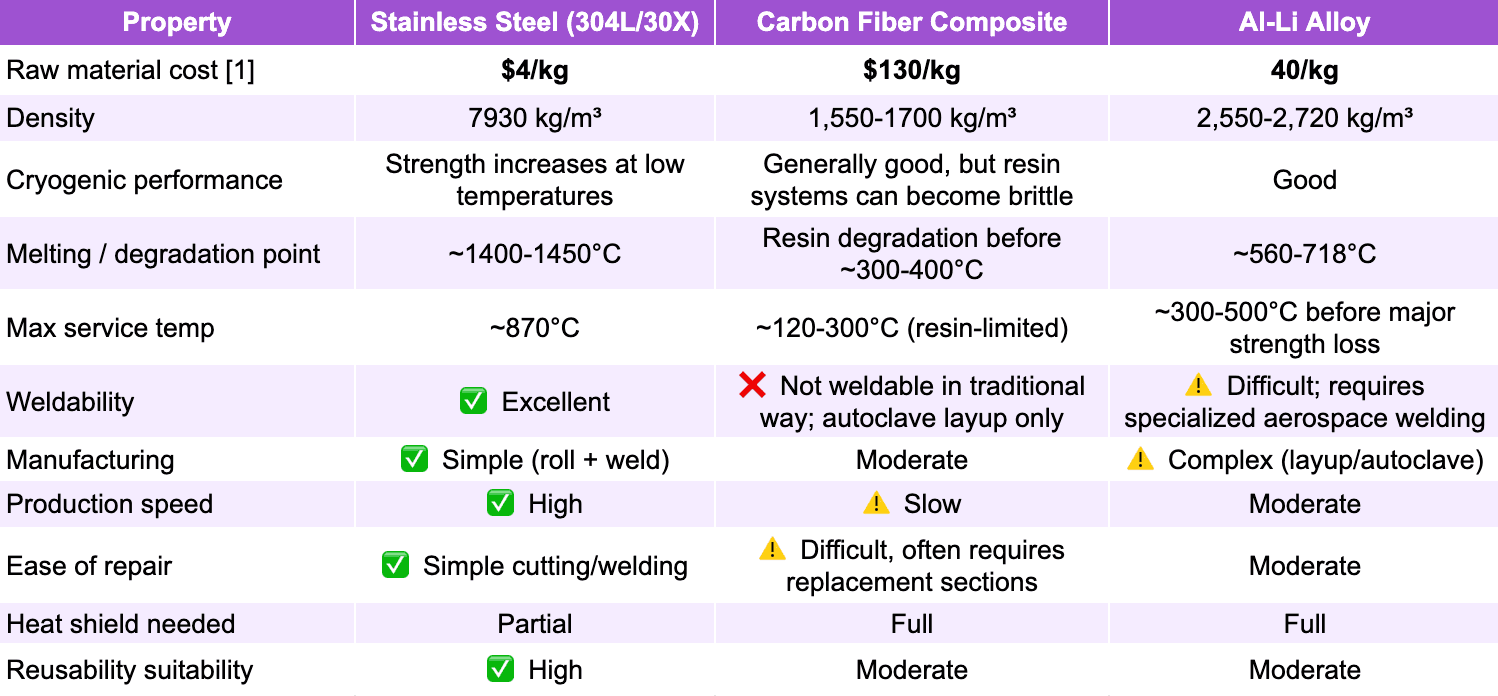
Sources: [1] Elon’s comments from interview; cfccarbon.com, dexcraft.com, amardeepsteel.com. Copyright © Jarsy Research
2.3 Engine Architecture: The Raptor Revolution
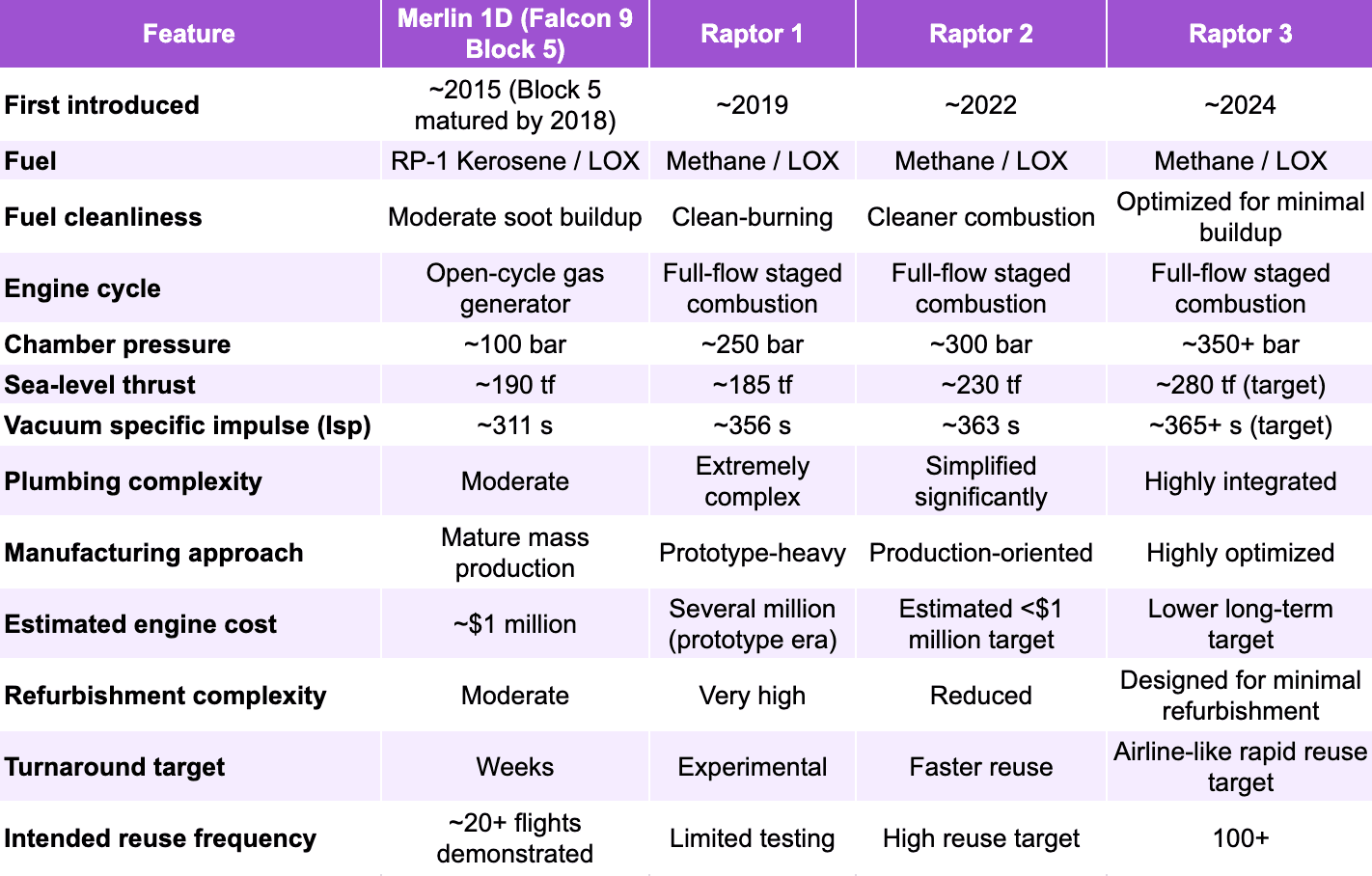
Raptor engines are the core technology behind Starship’s full-reusability strategy. Unlike the Merlin engines used on Falcon 9, Raptor uses liquid methane and liquid oxygen, which burn cleaner than kerosene and are better suited for repeated reuse.
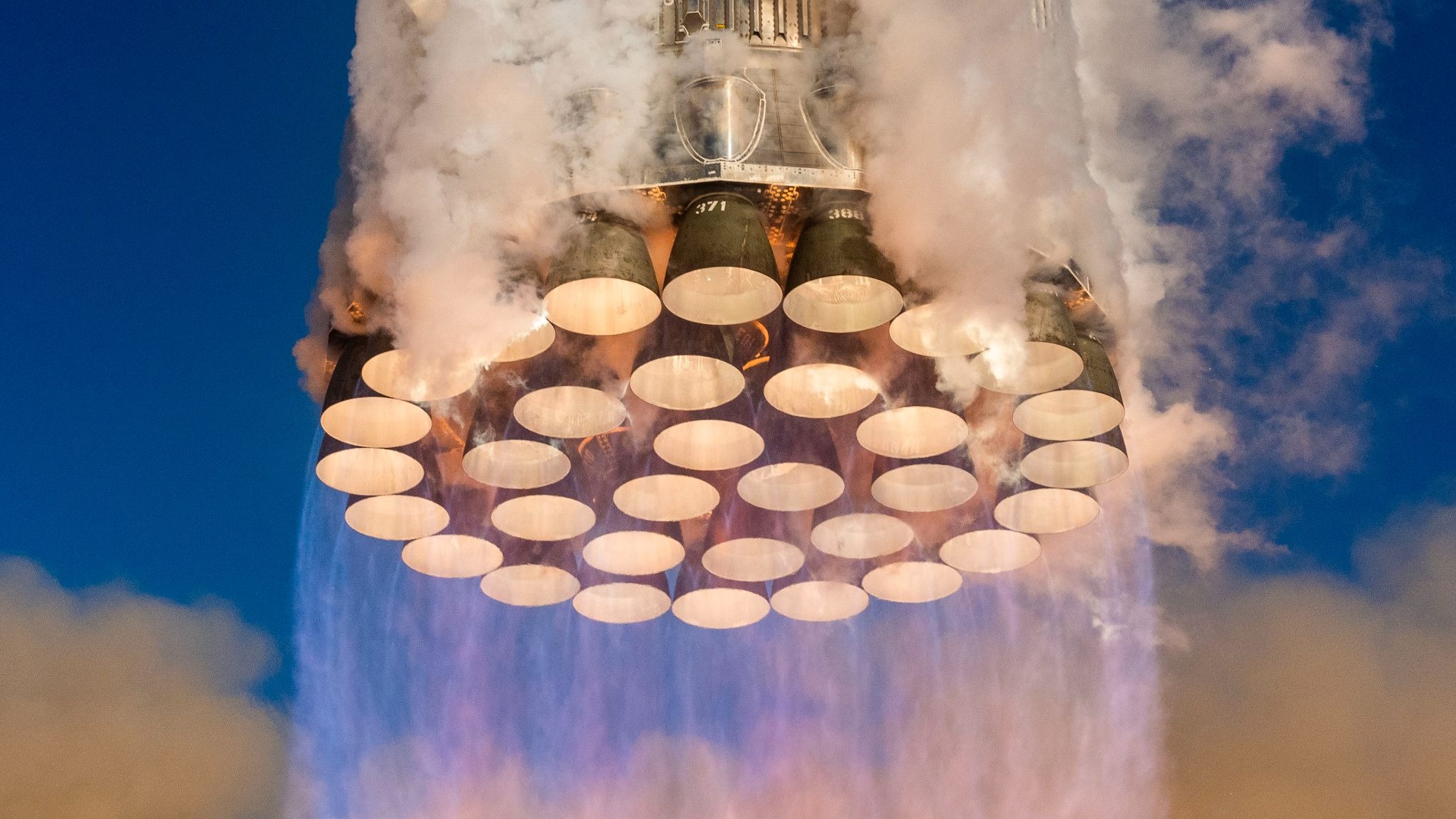
33 Raptor engines on Super Heavy. Image Credit: SpaceX
More importantly, Raptor uses a full-flow staged combustion cycle: the most efficient and technically demanding rocket engine designs ever developed (Elon himself mentioned it’s 10X more complicated than Merlin engines). This allows higher chamber pressure, greater fuel efficiency, and lower thermal stress, but has historically been too complex and expensive for large-scale reuse. SpaceX’s goal is to industrialize the architecture through mass manufacturing and simplified design.
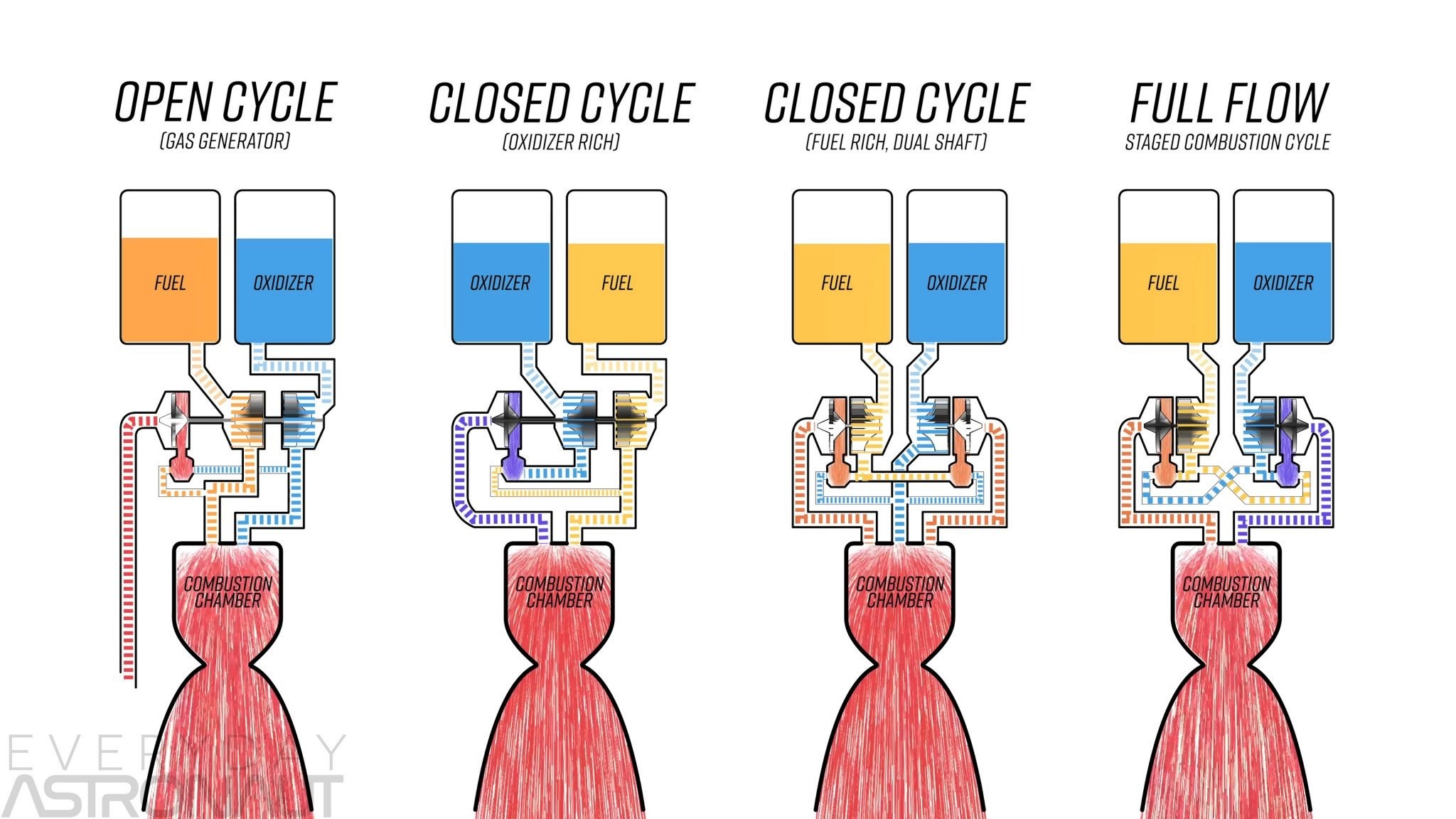
Image Credit: Everyday Astronaut (everydayastronaut.com)
Comparison of Engines
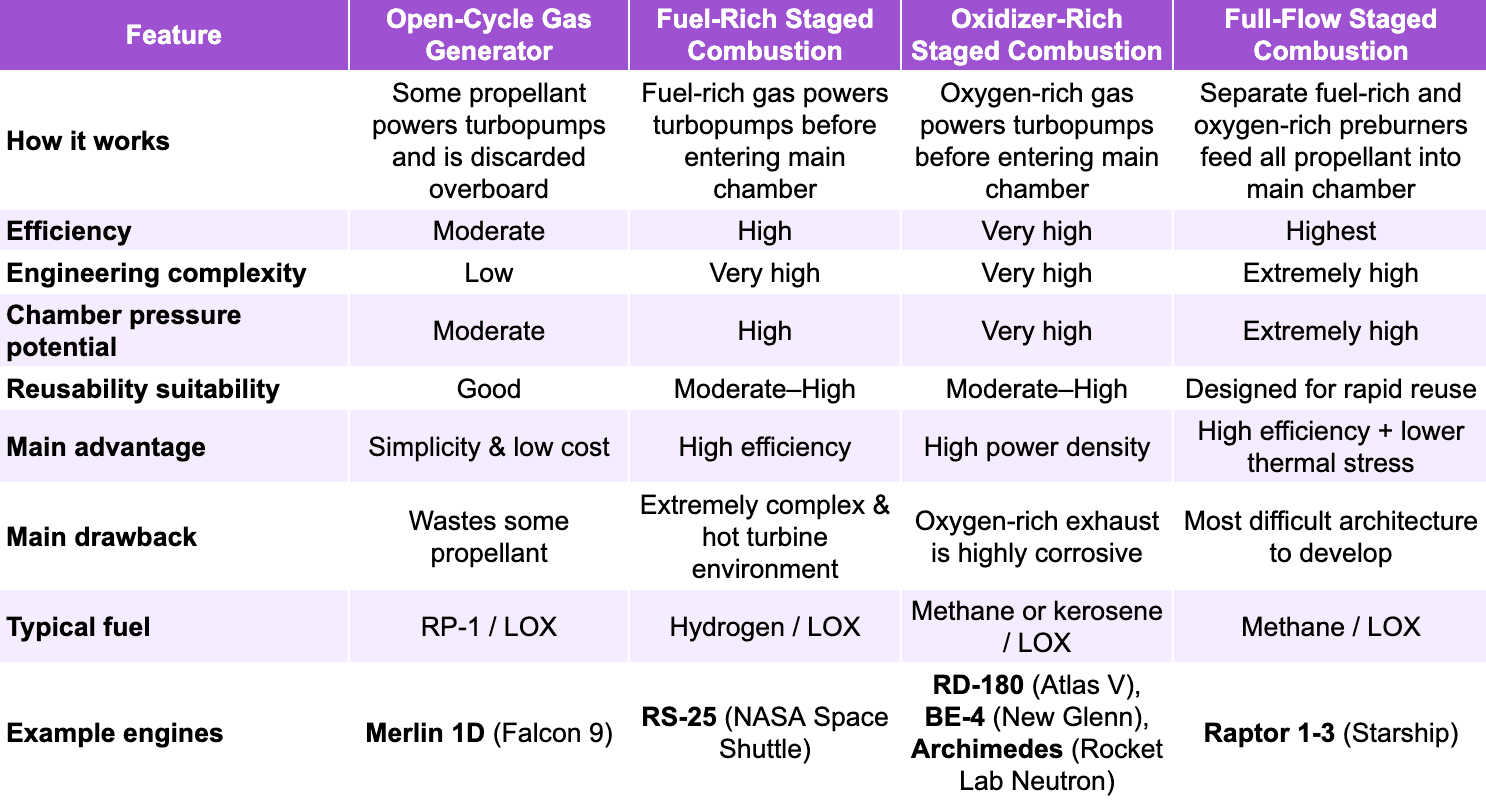
Source: everydayastronaut.com, the space race youtube channel. Copyright © Jarsy Research
The evolution from Raptor 1 to Raptor 3 reflects this approach. Early versions focused on proving the engine cycle, while later versions prioritized manufacturability, reliability, and rapid reuse. Raptor 2 simplified plumbing and reduced part count for large-scale production, while Raptor 3 further integrated components into the engine structure itself, increasing performance while reducing complexity.
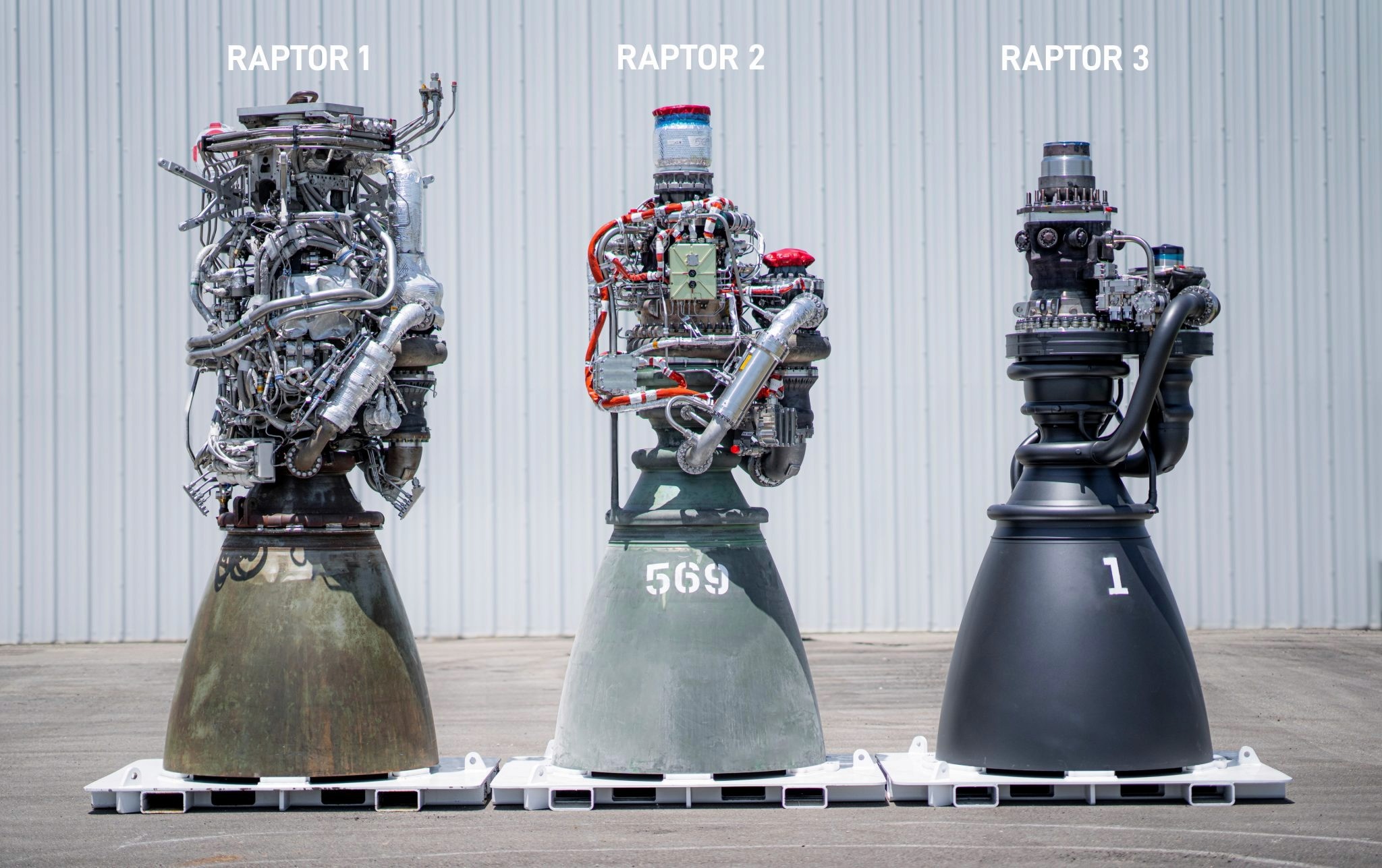
Image Credit: SpaceX
Source: wikipedia, Jarsy Research. Copyright © Jarsy Research
2.4 Heat Shield Design: Engineering for Rapid Reuse
Starship uses a thermal protection system built around hexagonal ceramic tiles mounted onto a stainless-steel structure. Unlike NASA’s Space Shuttle, whose heat-shield tiles were highly customized and required extensive inspection and replacement between flights, Starship’s system is designed for durability, standardization, and minimal refurbishment at high flight cadence.
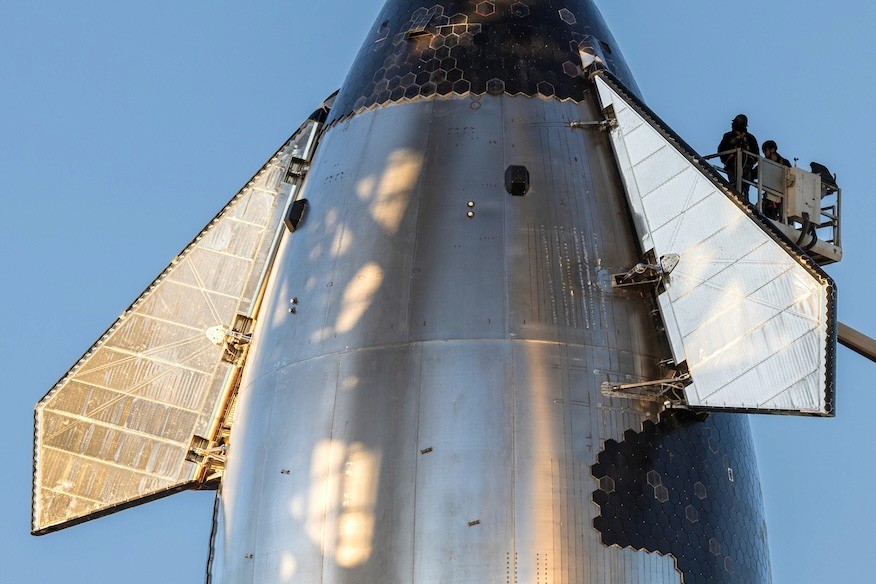
Image Credit: Adam Bernstein/Spaceflight Now
The stainless-steel structure underneath is a key advantage. Because steel tolerates much higher temperatures than aluminum, the heat shield carries less thermal burden during reentry. SpaceX also reduces peak heating through Starship’s “belly flop” maneuver, using atmospheric drag to slow the vehicle before landing.
The tiles themselves are optimized for operational simplicity. Their hexagonal geometry avoids straight-line gaps where hot plasma could penetrate, while mostly standardized shapes and mechanical attachment methods simplify manufacturing, inspection, and replacement. Jarsy estimates the cost of manufacturing each tile is roughly $250, implying a manufacturing cost of about $4,960 per square meter of coverage, dramatically lower than the Space Shuttle’s thermal protection system.
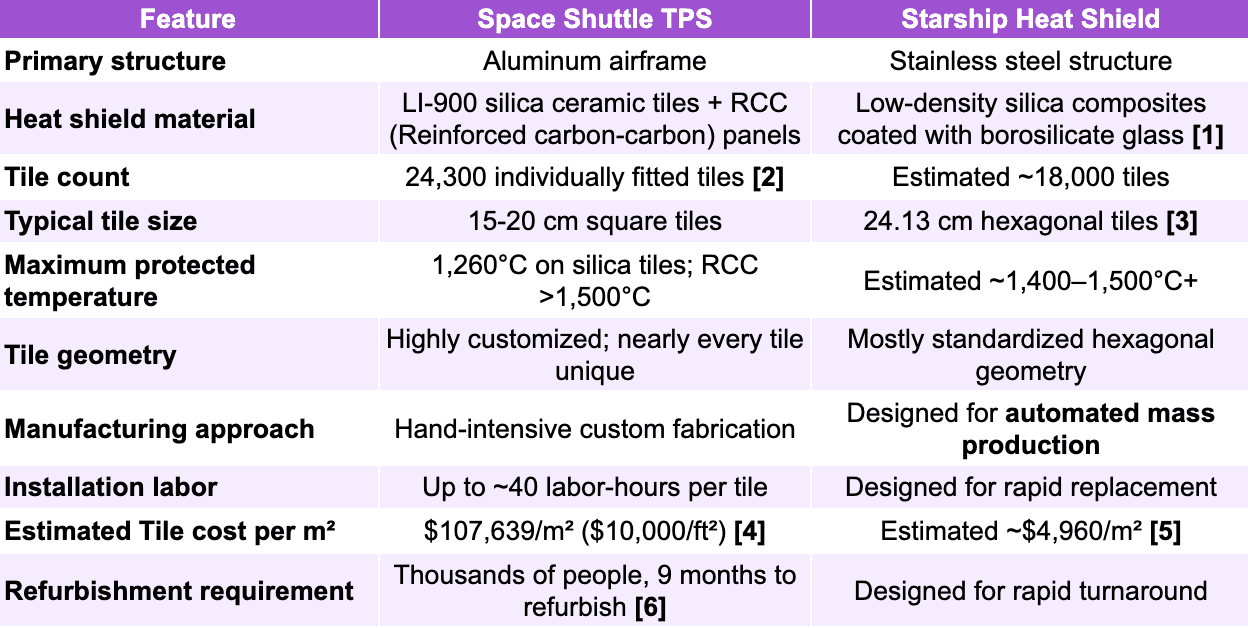
Comparison of starship heat shield vs Space Shuttle TPS (thermal protection system). [1] link.springer.com/; [2] Wikipedia; [3] space.stackexchange.com, [4] collectspace.com, [5] Jarsy estimate, using $250 per tile cost; [6] Elon X post. Copyright © Jarsy Research
2.5 Putting It Together: The Path to sub-$200/kg
Combined, these innovations are designed to enable full rapid reusability and continuously reduce launch costs over time. Based on our estimates, Starship could lower launch costs to roughly $169-200/kg by 2029 assuming ~10 reuses per vehicle, and to around $89-105/kg by 2031 with ~20 flights. In the longer term, if SpaceX achieves 100+ flights per vehicle and reduces Raptor engine costs to ~$250,000 each, launch costs could potentially fall to just $23-28/kg.
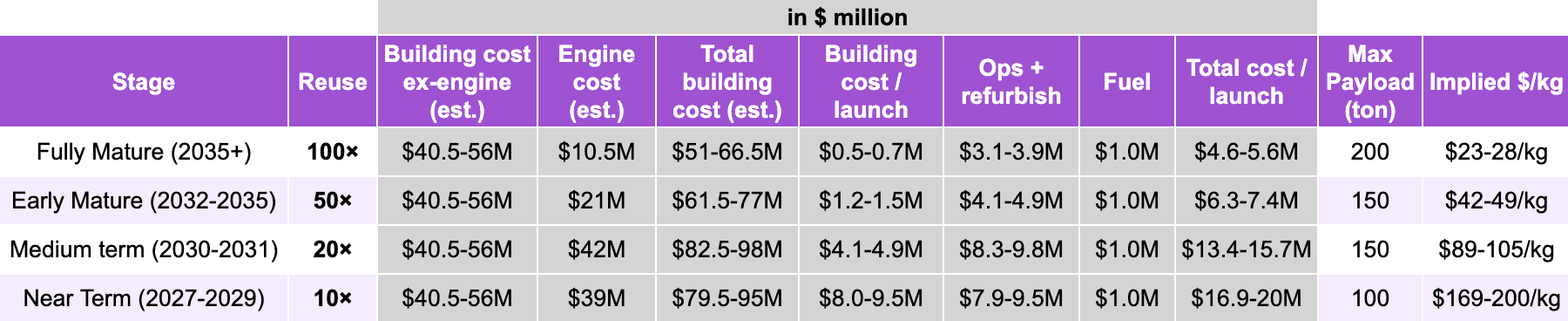
Starship launch cost estimates. From 2030, assuming Starship V4 is running, there will be 42 raptor engines according to Elon’s post. Copyright © Jarsy Research
3. Starlink, Orbital Computing, and the Economics of Space AI
If Starship achieves the launch-cost reductions outlined in the previous chapter, the economics of orbital AI infrastructure begin to change rapidly. As mentioned earlier, Google’s “Project Suncatcher” paper argued that orbital-scale AI systems could become economically viable once launch costs fall toward the ~$200/kg range.
What makes this benchmark especially promising is that the paper’s estimates are based only on the relatively constrained Starlink V2 Mini platform, which was designed to fit within Falcon 9 payload constraints. SpaceX is also developing the much larger Starlink V2 system for Starship, enabling significantly larger solar arrays and higher power-generation capability per satellite.
Using the same assumptions as Google Research’s paper, including 22% solar-panel efficiency, 1.361 kW/m² solar insolation, and 90% packing efficiency for square cells, we can estimate the implied cost of orbital electricity generation using different Starlink variants under various Starship launch-cost scenarios, shown below:

Sources: Starlink FCC filing 2022; Google Project Suncatcher Paper; Teslarati.com.
Copyright © Jarsy Research
For comparison, the cheapest large-scale AI infrastructure today is concentrated in U.S. regions with abundant hydro, wind, or low-cost natural gas power, with estimated electricity prices shown below. As the comparison with Starlink V2 Mini and Starlink V2 suggests, once launch costs approach $200/kg, orbital solar power begins converging with terrestrial industrial electricity prices. If launch costs fall toward the ~$100/kg range, space-based electricity could become cheaper than power in many major AI data-center regions. At $23-28/kg, orbital electricity could potentially reach around $0.01/kWh, making space-based AI infrastructure significantly more attractive than even the cheapest terrestrial AI power markets today.
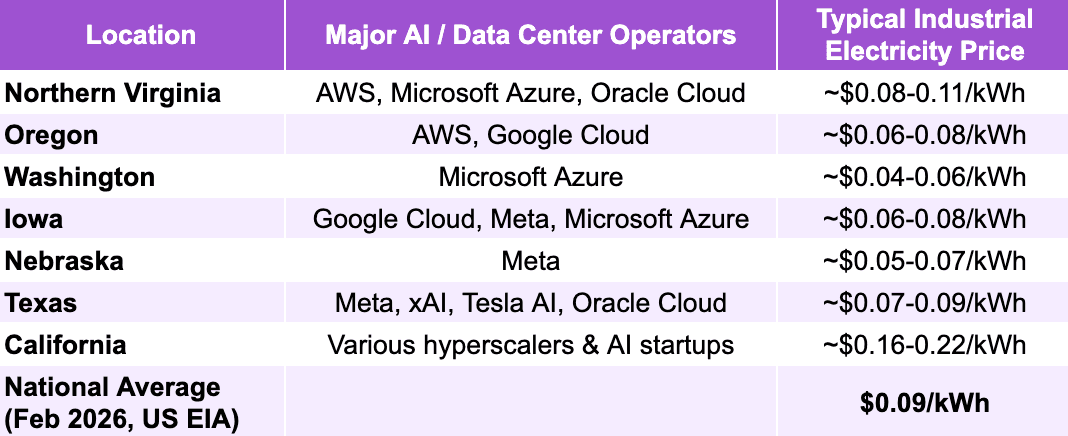
Source: US EIA (https://www.eia.gov/). Copyright © Jarsy Research
This does not mean AI training will immediately move into orbit. Radiation exposure, thermal management, networking latency, maintenance, and hardware reliability remain major engineering challenges. But if Starship achieves airline-like reuse at scale, the economics of orbital AI infrastructure begin shifting from speculative concept toward plausible long-term reality.
4. The Beginning of the Orbital Age
Whether Starship ultimately achieves launch costs below $200/kg or even toward below $30/kg remains uncertain. Significant challenges still remain, particularly around upper-stage reuse, heat-shield durability, orbital refueling, and rapid launch cadence. However, the broader trend is increasingly clear: launch costs are falling faster than at any previous point in spaceflight history.
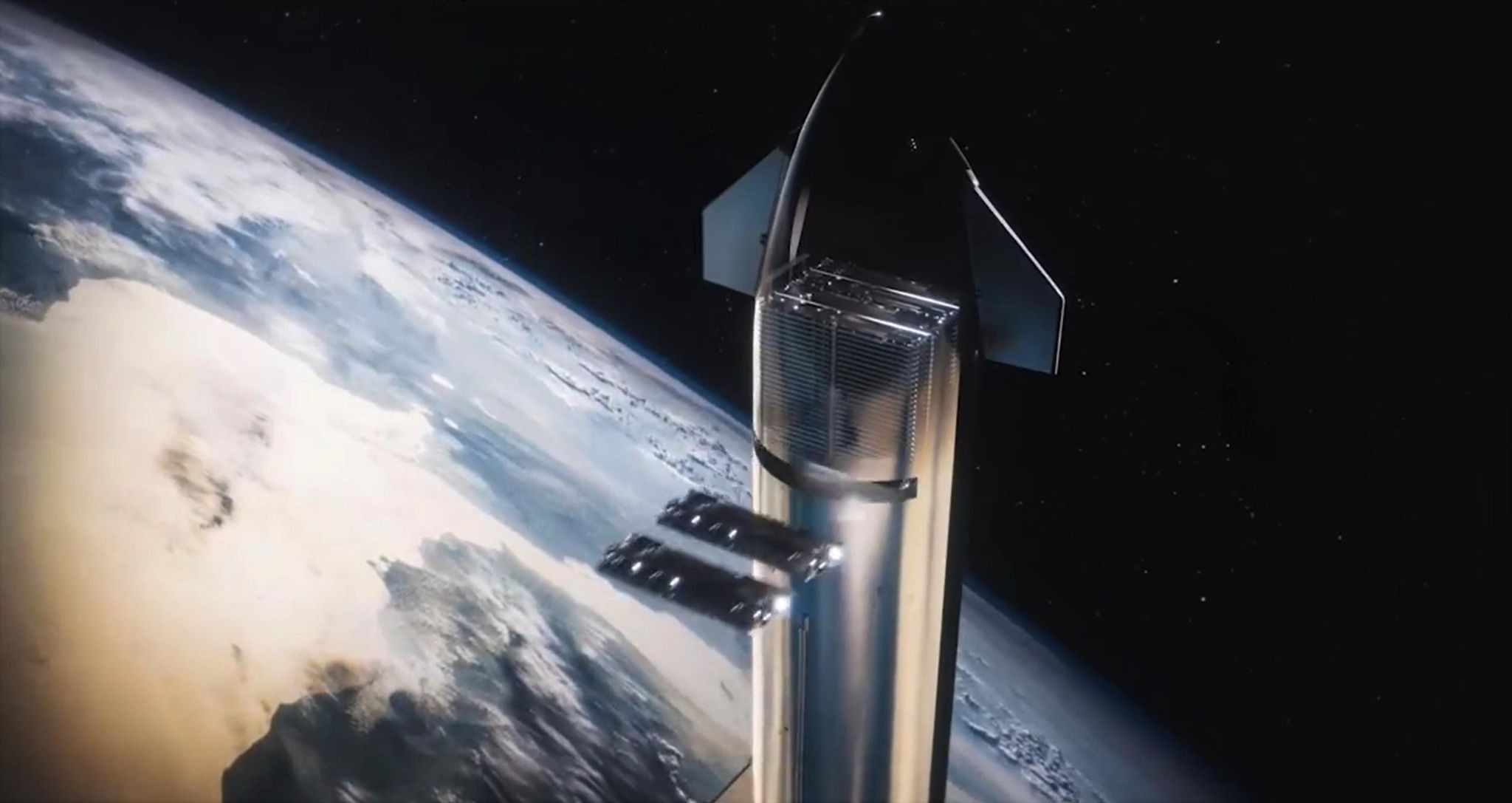
Image Credit: SpaceX
If these reductions continue, the implications extend far beyond launch services. Cheap and frequent access to orbit could enable entirely new industries, including orbital manufacturing, space-based energy systems, and large-scale AI infrastructure powered directly by continuous solar energy.
Importantly, SpaceX is no longer alone in pursuing reusable heavy-lift systems. Blue Origin is developing New Glenn, Rocket Lab is building Neutron, and multiple Chinese launch companies are also racing toward Falcon 9-style reuse. As competition increases, launch economics may continue improving through manufacturing scale and higher flight cadence.
The future remains uncertain, but for the first time in decades, truly large-scale orbital infrastructure no longer appears physically impossible or economically absurd. It increasingly looks like a problem of engineering, manufacturing, and execution. And if this transition succeeds, the next great industrial expansion may not happen on Earth, but in orbit above it.
🚀🛰️🌌☀️🔌💡🌍
Further Reading: Google Project SunCatcher Paper, How SpaceX Reinvented The Rocket Engine, Starship vs Falcon 9 by Everyday Astronaut, The Evolution of the Rocket Engine, First Look Inside SpaceX's Starfactory w/ Elon Musk