A $22B Rumor, a $10B Deal: Cerebras’ Sprint Toward the Public Markets

A $22B Rumor, a $10B Deal: Cerebras’ Sprint Toward the Public Markets

Cerebras secures a $10 billion OpenAI partnership and eyes a $22 billion valuation, challenging Nvidia's dominance with wafer-scale speed. As IPO rumors heat up for 2026, we analyze the shift from technical curiosity to critical AI infrastructure.

unmanned
unmanned

Image Credit: OpenAI.com

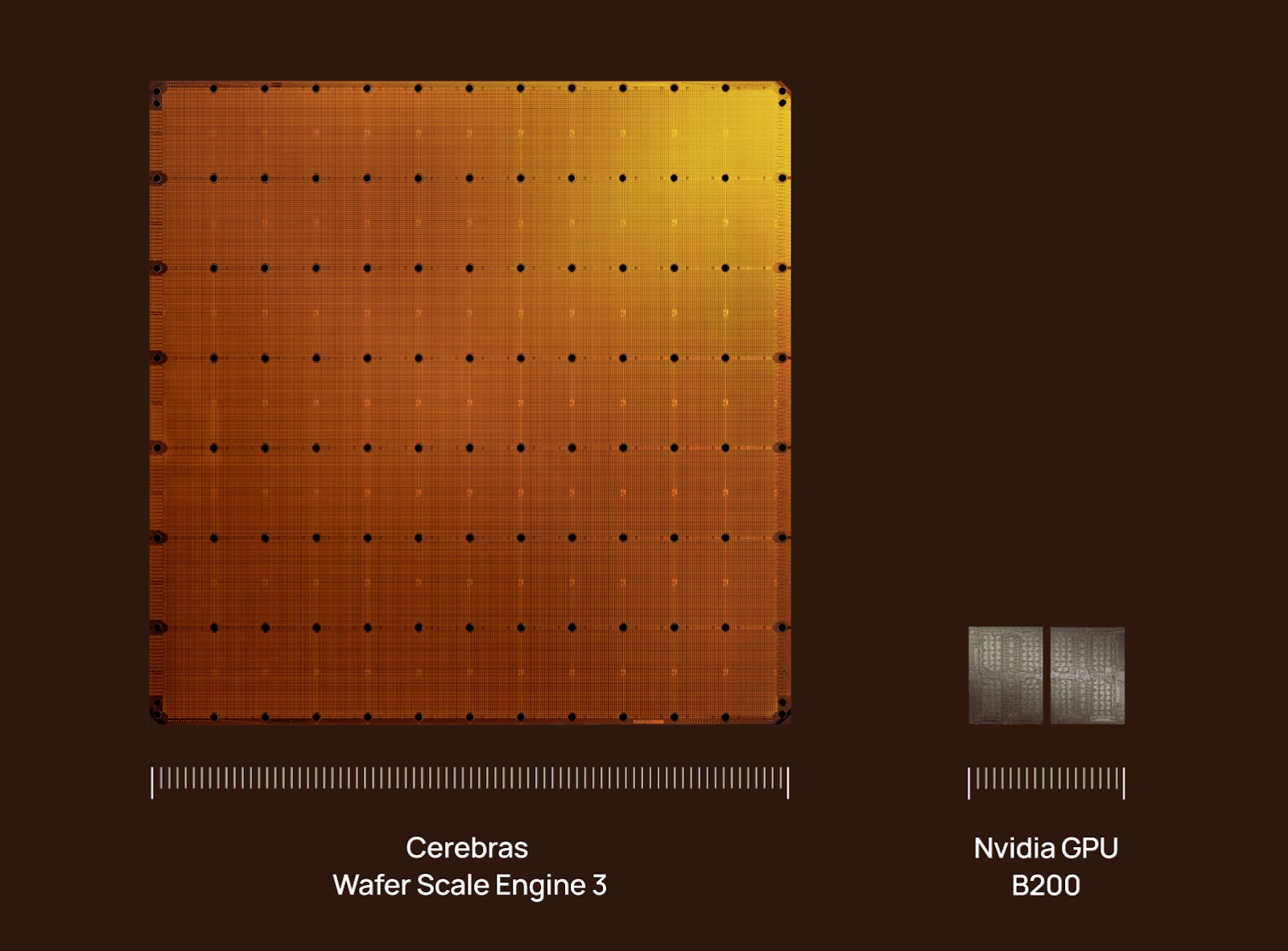
For much of its history, Cerebras has been one of the most ambitious and polarizing names in AI hardware. Its wager was radical: instead of stitching together ever-larger GPU clusters, build one giant wafer-scale processor and let models run without the communication bottlenecks that plague distributed systems.

We previously looked at how that architectural bet stacks up against Nvidia’s GPU ecosystem in “Cerebras vs. Nvidia: Who Leads the AI Compute War?” What’s changed since then is not the theory, but the business reality.

Between late 2025 and early 2026, Cerebras landed a marquee customer, accelerated revenue growth, and entered reported talks to raise capital at a $22 billion valuation, all while preparing for a potential 2026 IPO. Wafer-scale is no longer just a technical curiosity, it’s becoming a capital-markets story.

1. The $10 Billion Validation: The OpenAI Deal

In January 2026, reporting revealed that OpenAI had agreed to purchase up to 750 megawatts of compute capacity from Cerebras in a multi-year deal valued at more than $10 billion, with deployments extending through 2028.

This wasn’t a pilot or a limited experiment. It was an infrastructure-level commitment.

The significance goes beyond the headline number:

  • Validation at the highest level: OpenAI is the world’s most demanding buyer of AI compute.

  • Revenue visibility: multi-year capacity contracts reduce volatility and strengthen IPO-era narratives.

  • Customer diversification: Cerebras had previously faced criticism for relying too heavily on a single major customer. The OpenAI deal materially changes that picture.
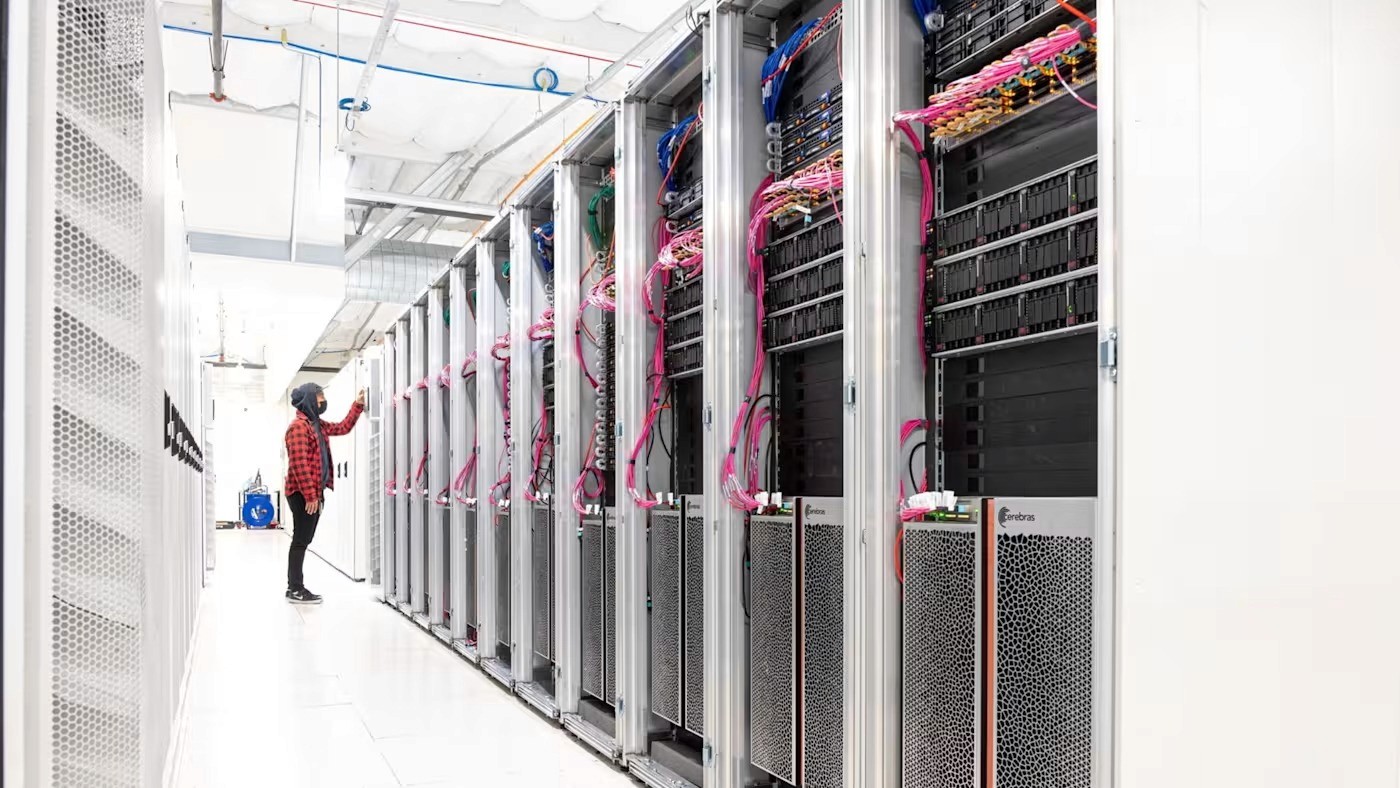

Image Credit: ft.com

2. Performance Claims: Tokens per Second Winner

In independent benchmarking reported by Artificial Analysis recently, the Cerebras CS-3 achieved approximately 2,500–2,700 tokens per second running inference on Meta’s 400 B-parameter Llama 4 Maverick model, compared with roughly 1,000 tokens per second on an Nvidia DGX B200 Blackwell GPU cluster in the same test. 

These figures are workload-specific, but directionally important. As context lengths grow and inference volumes explode, performance is increasingly limited not by raw compute, but by memory locality and interconnect overhead. This is precisely where Cerebras’ wafer-scale architecture shines, and why OpenAI’s interest is focused on inference, not just training.
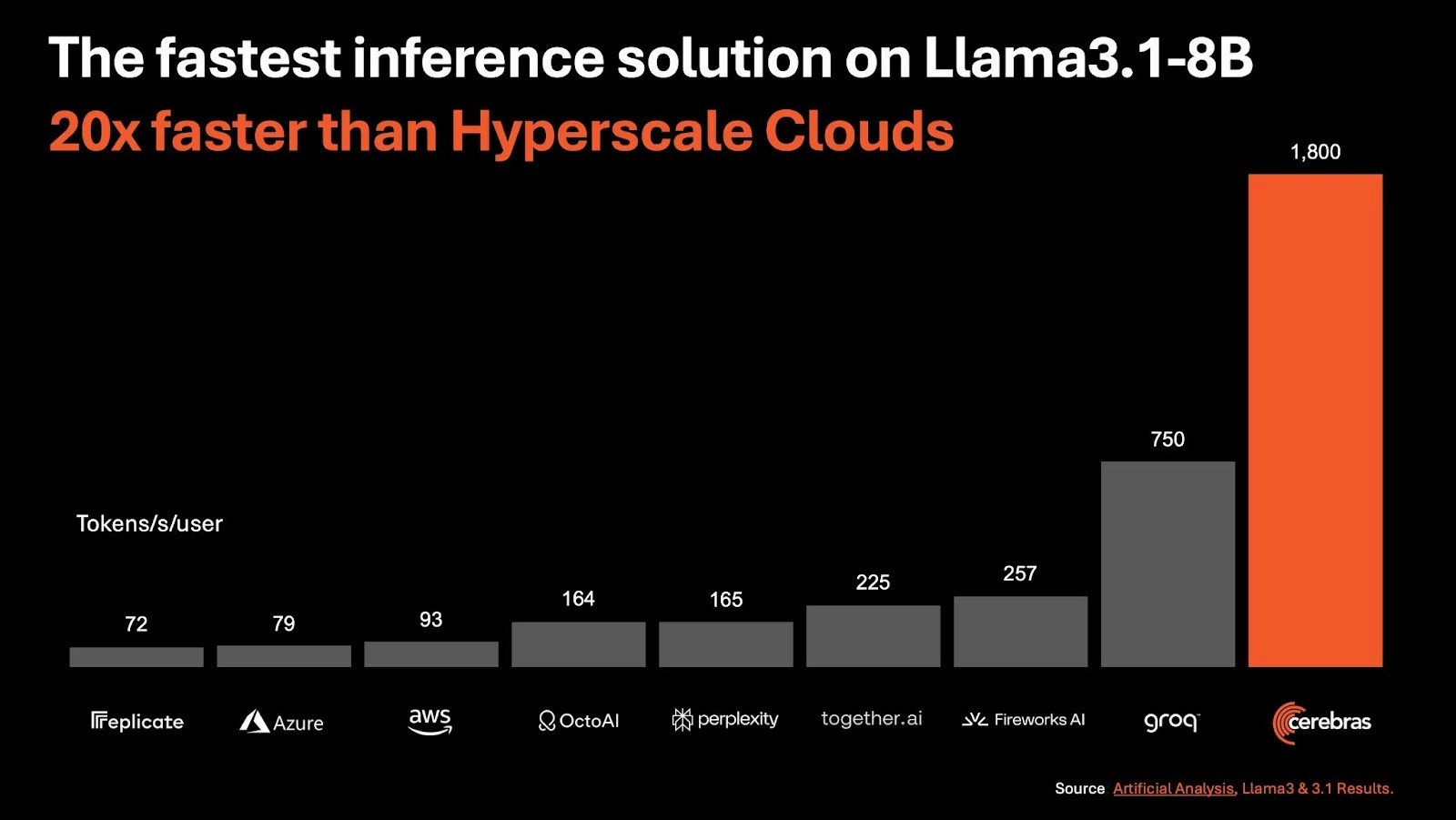
Image Credit: Cerebras

3. From customer concentration to customer momentum

Earlier public disclosures made one risk uncomfortably clear: customer concentration. At one point, a single customer accounted for the vast majority of Cerebras’ revenue, a red flag for public investors.

The past two years mark a clear pivot: 

  • Broader adoption across enterprise, research, and platform customers

  • Expansion beyond sovereign and anchor buyers

  • A marquee OpenAI commitment that reshapes the revenue mix

Revenue climbed from sub-$100 million levels in 2023 to hundreds of millions by 2024, and private-market modeling increasingly points to a credible path toward $500 million to $1 billion+ in annual revenue as large inference contracts ramp up.

That scale is what turns technical differentiation into an IPO-grade story.

4. Cerebras vs. Nvidia, revisited

Nvidia still dominates AI compute through software ecosystems, developer mindshare, and full-stack platforms. Cerebras isn’t trying to replace that dominance overnight. Instead, its strategy is narrower and more surgical:

  • High-throughput inference at scale

  • Simpler scaling for giant models

  • Reduced interconnect complexity

Image Credit: Cerebras

Ironically, Nvidia reinforced this framing itself. By agreeing to a roughly $20 billion deal involving Groq, Nvidia signaled that inference-specific differentiation is strategically valuable enough to command enormous premiums. That transaction changed how the entire market thinks about inference accelerators.

5. The Groq multiple - and what it implies for Cerebras

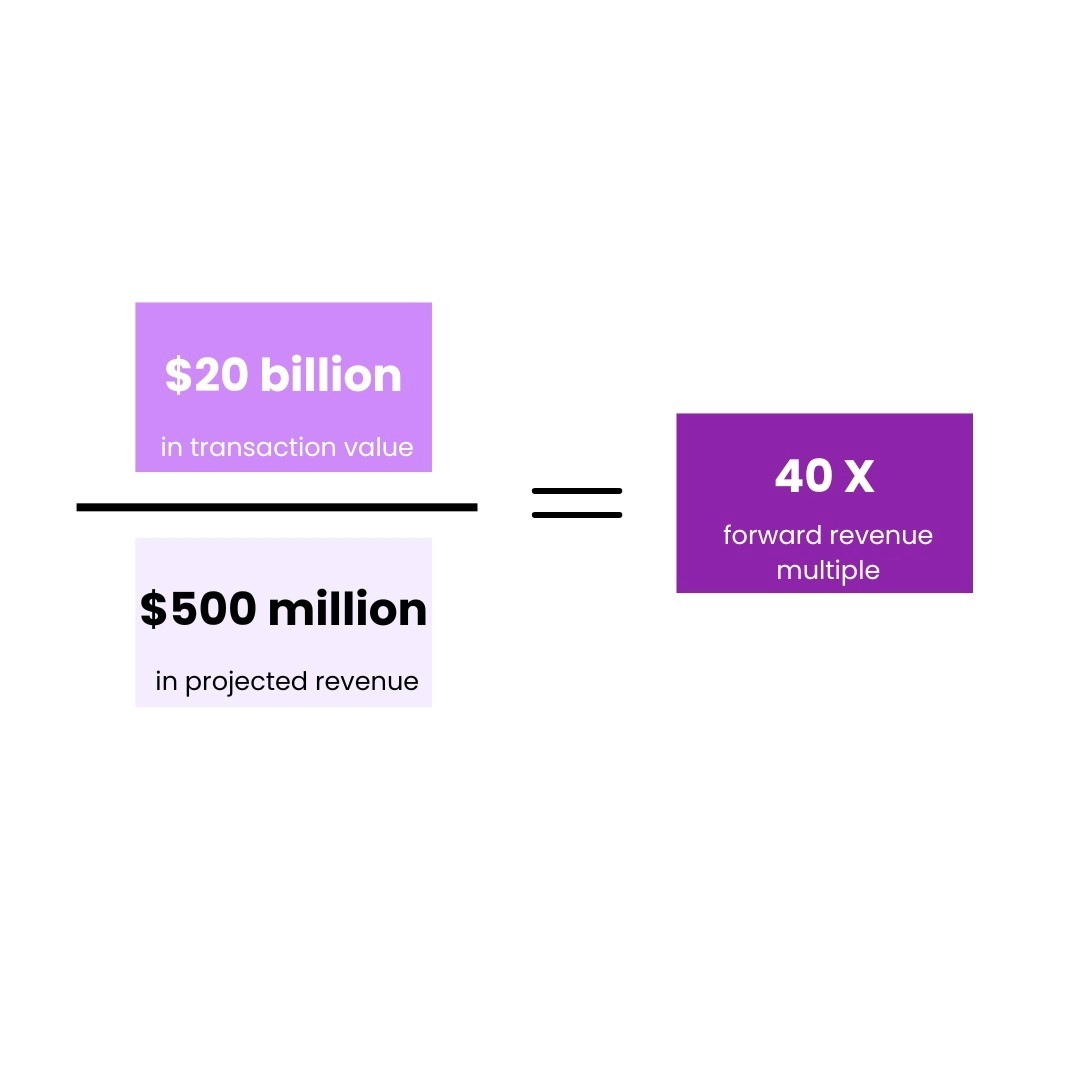
Public reporting around Nvidia’s Groq deal implies:

~ $500 million in projected revenue

~ $20 billion in transaction value

40× forward revenue multiple

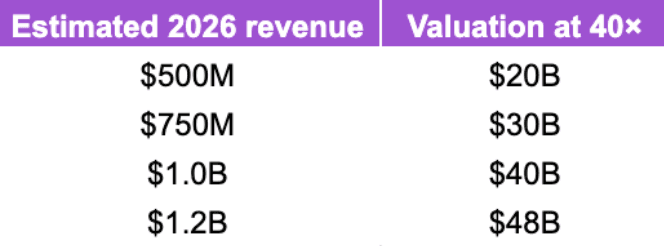
That multiple would be extraordinary for traditional semiconductors, but inference infrastructure is being valued more like strategic software platforms. If Cerebras were valued on similar terms, the IPO math becomes below:
Copyright © Jarsy Research

For context: Cerebras last raised at ~$8.1 Billion in late 2025. It is reportedly in talks to raise capital at ~$22 Billion. An IPO is widely rumored for 2026.

6. What Comes Next for Cerebras

As Cerebras enters its next phase, the debate has shifted from whether wafer-scale computing works to whether it can be deployed reliably and repeatedly at scale. The OpenAI agreement offers a real-world test of performance, operations, and integration across large inference workloads.

What matters next is execution: how smoothly systems are delivered, how they perform in production, and how broadly the approach resonates beyond a single flagship customer. For the first time, Cerebras is being evaluated not just as a bold hardware innovator, but as a core piece of AI infrastructure.

Further reading: Introducing Cerebras Inference; Cerebras CS-3 vs. Nvidia DGX B200 Blackwell, Cerebras & OpenAI Deal; Cerebras Potential IPO

Image Credit: OpenAI.com

For much of its history, Cerebras has been one of the most ambitious and polarizing names in AI hardware. Its wager was radical: instead of stitching together ever-larger GPU clusters, build one giant wafer-scale processor and let models run without the communication bottlenecks that plague distributed systems.

We previously looked at how that architectural bet stacks up against Nvidia’s GPU ecosystem in “Cerebras vs. Nvidia: Who Leads the AI Compute War?” What’s changed since then is not the theory, but the business reality.

Between late 2025 and early 2026, Cerebras landed a marquee customer, accelerated revenue growth, and entered reported talks to raise capital at a $22 billion valuation, all while preparing for a potential 2026 IPO. Wafer-scale is no longer just a technical curiosity, it’s becoming a capital-markets story.

1. The $10 Billion Validation: The OpenAI Deal

In January 2026, reporting revealed that OpenAI had agreed to purchase up to 750 megawatts of compute capacity from Cerebras in a multi-year deal valued at more than $10 billion, with deployments extending through 2028.

This wasn’t a pilot or a limited experiment. It was an infrastructure-level commitment.

The significance goes beyond the headline number:

  • Validation at the highest level: OpenAI is the world’s most demanding buyer of AI compute.

  • Revenue visibility: multi-year capacity contracts reduce volatility and strengthen IPO-era narratives.

  • Customer diversification: Cerebras had previously faced criticism for relying too heavily on a single major customer. The OpenAI deal materially changes that picture.


Image Credit: ft.com

2. Performance Claims: Tokens per Second Winner

In independent benchmarking reported by Artificial Analysis recently, the Cerebras CS-3 achieved approximately 2,500–2,700 tokens per second running inference on Meta’s 400 B-parameter Llama 4 Maverick model, compared with roughly 1,000 tokens per second on an Nvidia DGX B200 Blackwell GPU cluster in the same test. 

These figures are workload-specific, but directionally important. As context lengths grow and inference volumes explode, performance is increasingly limited not by raw compute, but by memory locality and interconnect overhead. This is precisely where Cerebras’ wafer-scale architecture shines, and why OpenAI’s interest is focused on inference, not just training.

Image Credit: Cerebras

3. From customer concentration to customer momentum

Earlier public disclosures made one risk uncomfortably clear: customer concentration. At one point, a single customer accounted for the vast majority of Cerebras’ revenue, a red flag for public investors.

The past two years mark a clear pivot: 

  • Broader adoption across enterprise, research, and platform customers

  • Expansion beyond sovereign and anchor buyers

  • A marquee OpenAI commitment that reshapes the revenue mix

Revenue climbed from sub-$100 million levels in 2023 to hundreds of millions by 2024, and private-market modeling increasingly points to a credible path toward $500 million to $1 billion+ in annual revenue as large inference contracts ramp up.

That scale is what turns technical differentiation into an IPO-grade story.

4. Cerebras vs. Nvidia, revisited

Nvidia still dominates AI compute through software ecosystems, developer mindshare, and full-stack platforms. Cerebras isn’t trying to replace that dominance overnight. Instead, its strategy is narrower and more surgical:

  • High-throughput inference at scale

  • Simpler scaling for giant models

  • Reduced interconnect complexity

Image Credit: Cerebras

Ironically, Nvidia reinforced this framing itself. By agreeing to a roughly $20 billion deal involving Groq, Nvidia signaled that inference-specific differentiation is strategically valuable enough to command enormous premiums. That transaction changed how the entire market thinks about inference accelerators.

5. The Groq multiple - and what it implies for Cerebras

Public reporting around Nvidia’s Groq deal implies:

~ $500 million in projected revenue

~ $20 billion in transaction value

40× forward revenue multiple

That multiple would be extraordinary for traditional semiconductors, but inference infrastructure is being valued more like strategic software platforms. If Cerebras were valued on similar terms, the IPO math becomes below:

Copyright © Jarsy Research

For context: Cerebras last raised at ~$8.1 Billion in late 2025. It is reportedly in talks to raise capital at ~$22 Billion. An IPO is widely rumored for 2026.

6. What Comes Next for Cerebras

As Cerebras enters its next phase, the debate has shifted from whether wafer-scale computing works to whether it can be deployed reliably and repeatedly at scale. The OpenAI agreement offers a real-world test of performance, operations, and integration across large inference workloads.

What matters next is execution: how smoothly systems are delivered, how they perform in production, and how broadly the approach resonates beyond a single flagship customer. For the first time, Cerebras is being evaluated not just as a bold hardware innovator, but as a core piece of AI infrastructure.

Further reading: Introducing Cerebras Inference; Cerebras CS-3 vs. Nvidia DGX B200 Blackwell, Cerebras & OpenAI Deal; Cerebras Potential IPO
Subscribe to our newsletter

Email

Subscribe to our newsletter

Email

Recommended articles

开始投资

Jarsy Inc. 版权所有。

© 2024

本门户由 Jarsy, Inc.("Jarsy")运营,Jarsy 并不是注册的经纪-交易商或投资顾问。Jarsy 不提供关于本门户上显示的任何资产的投资建议、认可或推荐。本门户上的任何内容均不应被视为出售的要约、购买要约的请求或就证券的推荐。您有责任根据您的个人投资目标、财务状况和风险承受能力,确定任何投资、投资策略或相关交易是否适合您。您应咨询持牌法律专业人士和投资顾问,以获得任何法律、税务、保险或投资建议。Jarsy 不保证本网站上发布的任何投资机会的投资表现、结果或资本回报。通过访问本门户和其中的任何页面,您同意受门户为您提供的条款和政策的约束。在投资中涉及风险,并可能导致部分或全部损失。通过访问本网站,投资者理解并承认 1)投资一般而言,无论是在私募股权、股票市场还是房地产,都是有风险和不可预测的; 2)市场有其波动; 3)您所参与的投资可能不会产生正现金流或如您所期望的那样表现; 4)您投资的任何资产的价值可能随时下降,未来价值不可预测。在做出投资决策之前,建议潜在投资者查看所有可用信息并与他们的税务和法律顾问咨询。Jarsy 不提供关于本门户上发布的任何要约的投资建议或推荐。本文件中的任何与投资相关的信息均来自 Jarsy 认为可靠的来源,但我们对此类信息的准确性或完整性不作任何声明或保证,并因此不承担任何责任。链接到第三方网站或复制第三方文章并不构成 Jarsy 对所链接或复制内容的批准或认可。

本门户由 Jarsy, Inc.("Jarsy")运营,Jarsy 并不是注册的经纪-交易商或投资顾问。Jarsy 不提供关于本门户上显示的任何资产的投资建议、认可或推荐。本门户上的任何内容均不应被视为出售的要约、购买要约的请求或就证券的推荐。您有责任根据您的个人投资目标、财务状况和风险承受能力,确定任何投资、投资策略或相关交易是否适合您。您应咨询持牌法律专业人士和投资顾问,以获得任何法律、税务、保险或投资建议。Jarsy 不保证本网站上发布的任何投资机会的投资表现、结果或资本回报。通过访问本门户和其中的任何页面,您同意受门户为您提供的条款和政策的约束。在投资中涉及风险,并可能导致部分或全部损失。通过访问本网站,投资者理解并承认 1)投资一般而言,无论是在私募股权、股票市场还是房地产,都是有风险和不可预测的; 2)市场有其波动; 3)您所参与的投资可能不会产生正现金流或如您所期望的那样表现; 4)您投资的任何资产的价值可能随时下降,未来价值不可预测。在做出投资决策之前,建议潜在投资者查看所有可用信息并与他们的税务和法律顾问咨询。Jarsy 不提供关于本门户上发布的任何要约的投资建议或推荐。本文件中的任何与投资相关的信息均来自 Jarsy 认为可靠的来源,但我们对此类信息的准确性或完整性不作任何声明或保证,并因此不承担任何责任。链接到第三方网站或复制第三方文章并不构成 Jarsy 对所链接或复制内容的批准或认可。

开始投资

Jarsy Inc. 版权所有。

© 2024